Republicans Push Crackdown on Fake Crime Wave and Voter Fraud
Republicans push crackdown on crime wave that doesnt exist voter fraud – Republicans Push Crackdown on Fake Crime Wave and Voter Fraud – a phrase that has become increasingly common in political discourse, reflects a growing trend of fearmongering and the manipulation of public perception. This strategy, often employed by right-wing politicians, relies on exaggerating the prevalence of crime and voter fraud, painting a picture of a nation teetering on the brink of chaos.
By promoting this narrative, they seek to justify draconian policies that disproportionately impact marginalized communities and undermine democratic processes.
The “crime wave” narrative, a recurring theme in American politics, often resurfaces during times of political unrest or social change. It serves as a convenient scapegoat, diverting attention from systemic issues and fueling public anxieties. This tactic is not new; it has been used throughout history to justify discriminatory laws and policies, targeting specific groups based on race, ethnicity, or socioeconomic status.
The “Crime Wave” Narrative
The notion of a “crime wave” sweeping across the United States has become a recurring theme in American politics, particularly during periods of heightened political polarization. This narrative, often promoted by Republican politicians and media outlets, suggests a significant and alarming surge in crime rates, particularly violent crime, that threatens the safety and security of communities.
While crime rates are a complex and multifaceted issue, the “crime wave” narrative has been used to justify a range of policies, including increased law enforcement, stricter sentencing, and reduced social programs.
The Origin and Evolution of the “Crime Wave” Narrative
The “crime wave” narrative has a long history in the United States, dating back to the late 1960s and early 1970s, when rising crime rates, particularly in urban areas, coincided with social unrest and political upheaval. The narrative was further fueled by media coverage of high-profile crimes and the rise of the “law and order” movement, which emphasized tough-on-crime policies as a means of restoring social order.
In the 1980s and 1990s, the “war on drugs” and the rise of the “superpredator” theory, which suggested that a generation of young people was predisposed to violence, contributed to the continued prominence of the “crime wave” narrative.
The Reality of Crime Rates
While it is true that crime rates in the United States rose significantly during the 1960s and 1970s, they have been declining steadily since the early 1990s. According to the FBI’s Uniform Crime Reporting program, the violent crime rate in the United States has fallen by more than 50% since its peak in 1991.
Similarly, the property crime rate has also declined significantly during this period. While there have been some fluctuations in crime rates in recent years, the overall trend remains downward. It is important to note that crime rates vary significantly by region, demographic group, and type of crime.
The Political Motivations Behind the Narrative
The “crime wave” narrative has often been used by politicians and political parties to advance their agendas. For example, Republican politicians have frequently used the narrative to justify increased spending on law enforcement, stricter sentencing laws, and reductions in social programs.
These policies, they argue, are necessary to restore order and safety in communities. However, critics argue that these policies are often ineffective and can even exacerbate crime problems. They also point out that the “crime wave” narrative is often used to scapegoat marginalized communities and to justify policies that disproportionately impact people of color.
The Impact of the Narrative on Public Perception and Policy
The “crime wave” narrative has a significant impact on public perception and policy. By emphasizing the threat of crime, it can create fear and anxiety among the public, leading to support for punitive policies that may not be effective or just.
The narrative can also lead to racial profiling and discrimination, as people of color are often stereotyped as criminals. Furthermore, the narrative can divert attention from the root causes of crime, such as poverty, inequality, and lack of opportunity.
Voter Fraud Claims
The notion of widespread voter fraud in the United States is a persistent claim, often used to justify restrictions on voting access. However, evidence consistently demonstrates that voter fraud is extremely rare and does not pose a significant threat to the integrity of elections.
This claim is often used to disenfranchise minority voters and undermine public trust in democratic processes.
The Republican party’s relentless push to crackdown on a nonexistent crime wave and voter fraud feels increasingly desperate, especially as the former GOP lawmakers’ testimony paints a stark picture of Trump as a man isolated, abandoned, and nearly solely responsible for the events of January 6th.
These hearings are revealing the depth of Trump’s isolation and his willingness to sacrifice the very principles of democracy in his pursuit of power, which makes their focus on manufactured crises all the more concerning.
Prevalence of Voter Fraud
The prevalence of voter fraud in the United States is remarkably low. Numerous studies and investigations have found that instances of voter fraud are exceedingly rare. For instance, a comprehensive study by the Brennan Center for Justice examined over 1 billion votes cast in U.S.
elections from 2000 to 2014 and found only 31 credible instances of voter impersonation fraud. This translates to a rate of less than 0.000003%, highlighting the negligible nature of the issue.
Effectiveness of Existing Voter Fraud Prevention Measures
The United States already has robust systems in place to prevent voter fraud. These measures include voter registration databases, identification requirements at the polls, and post-election audits. These systems have proven effective in deterring and detecting fraud, further supporting the conclusion that voter fraud is a non-issue.
Historical Context of Voter Fraud Allegations
Historically, voter fraud allegations have often been used as a tool to suppress minority voting. For example, during the Jim Crow era, voter fraud accusations were frequently levied against Black voters to justify discriminatory practices like poll taxes, literacy tests, and grandfather clauses.
These tactics were designed to disenfranchise Black voters and maintain white political dominance.
Role of Misinformation and Disinformation
Misinformation and disinformation play a significant role in perpetuating voter fraud claims. These claims are often spread through social media, partisan websites, and right-wing media outlets. By spreading false or misleading information, these actors seek to undermine public trust in elections and legitimize restrictions on voting access.
Proposed Crackdowns
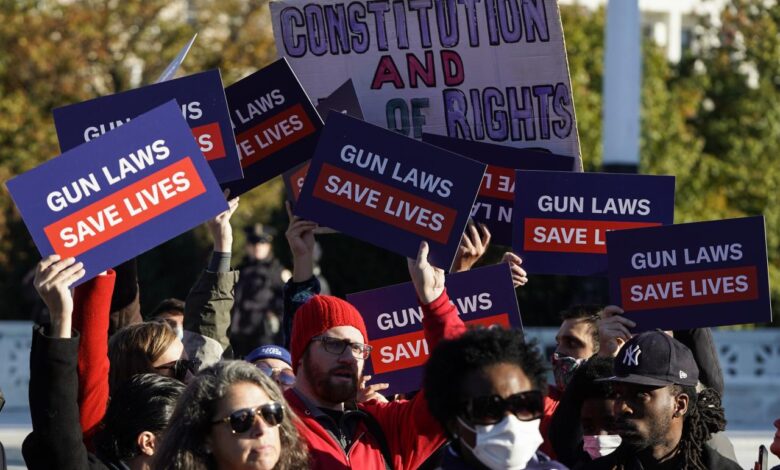
The Republican Party has proposed a range of policies and legislation aimed at addressing what they perceive as a “crime wave” and widespread voter fraud. These proposals, often presented as solutions to urgent problems, have drawn significant criticism from Democrats and voting rights advocates who argue that they are unnecessary and could disproportionately harm marginalized communities.
Increased Law Enforcement Funding and Resources
Republicans have advocated for increased funding for law enforcement agencies, arguing that this will bolster their capacity to combat crime. This includes proposals for hiring more police officers, providing additional training, and investing in advanced technology. Proponents argue that these measures will deter crime and enhance public safety.
However, critics contend that this approach is ineffective and may lead to increased police brutality and racial profiling. They point to studies showing that increased police presence does not necessarily lead to a reduction in crime rates and that police departments often misuse resources.
Tougher Sentencing Laws
Republicans have proposed harsher penalties for certain offenses, including mandatory minimum sentences for drug offenses and stricter penalties for repeat offenders. They argue that these measures will deter crime by sending a clear message that criminal activity will not be tolerated.
It’s fascinating to see how Republicans are simultaneously pushing for crackdowns on a “crime wave” that doesn’t exist and voter fraud that’s been repeatedly debunked, while simultaneously opposing measures like expanding abortion access. It’s almost as if their priorities are driven by something other than the public good.
Take, for example, Maryland’s GOP governor Larry Hogan, who recently vetoed a bill to expand abortion access marylands gop governor larry hogan vetoes bill to expand abortion access. This blatant disregard for women’s rights while simultaneously pushing for policies that target marginalized communities is a clear indication of their true agenda.
Critics, however, argue that these policies are counterproductive and lead to mass incarceration, particularly among minority communities. They point to research indicating that longer prison sentences do not necessarily reduce crime rates and that they can have detrimental effects on families and communities.
Restrictions on Voting, Republicans push crackdown on crime wave that doesnt exist voter fraud
Republicans have proposed a number of measures aimed at restricting access to voting, including voter ID laws, limits on early voting, and restrictions on mail-in voting. They argue that these measures are necessary to prevent voter fraud, which they claim is widespread.
However, critics contend that these measures are designed to suppress voter turnout, particularly among minority communities, and that there is no evidence of widespread voter fraud.
Challenges to Proposed Crackdowns
These proposed crackdowns have faced significant legal and constitutional challenges. Critics argue that many of these proposals violate the Voting Rights Act and the Fourteenth Amendment, which guarantee equal protection under the law. They also argue that these proposals are based on unfounded fears and are likely to have a disproportionate impact on minority communities.
Comparison with Existing Approaches
The proposed Republican crackdowns stand in contrast to existing approaches to crime and election integrity. Many Democrats and voting rights advocates favor a more nuanced approach that focuses on addressing the root causes of crime, such as poverty, lack of opportunity, and systemic racism.
They also emphasize the importance of ensuring that all eligible voters have equal access to the ballot box.
Public Opinion and Media Coverage: Republicans Push Crackdown On Crime Wave That Doesnt Exist Voter Fraud
The narrative of a crime wave and widespread voter fraud has been amplified by certain political and media circles, often with the aim of influencing public opinion and justifying policy changes. Examining public opinion polls and surveys, along with analyzing media coverage, helps us understand the impact of these narratives on public perception.
Public Opinion Polls and Surveys
Public opinion polls and surveys provide valuable insights into public attitudes towards crime and voter fraud. These surveys often reveal a disconnect between the perception of these issues and the actual data. For example, a 2022 Gallup poll found that 53% of Americans believe crime is increasing, while the actual crime rate has been declining for several years.
Similarly, a 2020 Pew Research Center survey found that 72% of Americans believe voter fraud is a major problem, but there is no evidence of widespread voter fraud. These findings suggest that public perception of crime and voter fraud is often influenced by media narratives and political rhetoric, rather than objective data.
Media Coverage and Public Perception
Media coverage plays a significant role in shaping public perception of crime and voter fraud. Sensationalized reporting and biased narratives can amplify public concerns about these issues, even when evidence is lacking.For example, Fox News and other conservative media outlets have repeatedly highlighted instances of alleged voter fraud, often presenting them as evidence of a widespread problem.
This type of reporting, while often lacking factual basis, can contribute to public distrust in the electoral system.
It’s baffling to see Republicans pushing for a crackdown on a “crime wave” of nonexistent voter fraud. This fear-mongering tactic, often fueled by misinformation, is designed to restrict voting access and undermine public trust in elections. The push for these restrictive measures is directly linked to the rise of influential election deniers, who have actively fueled a fight to control elections and suppress votes.
Read more about how these deniers have influenced the fight for election control. This strategy, sadly, seems to be working, as many people are convinced that voter fraud is a widespread problem, despite the lack of evidence. It’s time to focus on real issues and stop using phantom threats to manipulate the democratic process.
Examples of Biased or Misleading Reporting
Several instances of biased or misleading reporting related to crime and voter fraud have been documented. These include:
- Exaggerating Crime Statistics:Some media outlets tend to focus on specific, high-profile crimes, often ignoring broader trends in crime rates. This can create a false impression of a crime wave.
- Selective Reporting of Voter Fraud Allegations:Media outlets may selectively report on isolated instances of alleged voter fraud, often without providing context or evidence of a larger pattern.
- Using Inflammatory Language:Some media outlets use inflammatory language to describe crime and voter fraud, contributing to fear and anxiety among the public.
Impact of Social Media
Social media platforms have played a significant role in the dissemination of information and misinformation related to crime and voter fraud. The viral nature of social media allows for the rapid spread of false or misleading information, often without proper fact-checking.
For example, false claims about widespread voter fraud have been widely shared on platforms like Facebook and Twitter, contributing to public distrust in the electoral system.
The Role of Race and Politics
The “crime wave” narrative often intersects with racial and ethnic demographics, raising concerns about potential discriminatory impacts. Examining the racial makeup of areas targeted by crackdowns, the historical context of racial disparities in the criminal justice system, and the potential for exacerbating existing inequalities are crucial to understanding the complexities of this issue.
Furthermore, the role of political polarization and partisanship in fueling these debates cannot be ignored.
Racial and Ethnic Demographics of Targeted Areas
The “crime wave” narrative frequently targets specific geographic areas, often characterized by high concentrations of minority populations. For instance, in the context of the “war on drugs,” the focus on crack cocaine, prevalent in predominantly Black communities, led to disproportionate arrests and incarcerations of Black Americans.
This historical pattern highlights the potential for “crackdowns” to disproportionately impact minority communities, even if the underlying crime rates are not significantly different.
Historical and Contemporary Racial Disparities in the Criminal Justice System
The United States has a long and troubling history of racial disparities in the criminal justice system. From the era of Jim Crow laws to the present day, systemic racism has manifested in various forms, including:
- Discriminatory policing practices:Racial profiling, stop-and-frisk policies, and biased enforcement of laws have disproportionately targeted minority communities, leading to higher arrest rates for offenses that are not necessarily more prevalent in these communities.
- Unequal sentencing:Mandatory minimum sentences for drug offenses, for example, have contributed to the mass incarceration of Black and Latino Americans, even for relatively minor offenses.
- Bias in the justice system:From police brutality to discriminatory jury selection, the justice system has often been biased against minority individuals, leading to harsher punishments and a higher likelihood of conviction.
These historical and contemporary disparities have created a system that is inherently unfair and perpetuates racial inequality.
Potential for Exacerbating Racial Inequalities
The “crackdown” policies proposed in response to the “crime wave” narrative have the potential to exacerbate existing racial inequalities. Increased police presence in minority communities, stricter sentencing laws, and limited access to resources for rehabilitation can further marginalize these communities, leading to a cycle of poverty, crime, and incarceration.
For instance, the expansion of “broken windows” policing strategies, which focus on minor offenses, can lead to increased arrests and harassment of individuals in minority communities, even if they are not engaging in serious crimes.
Political Polarization and Partisanship
The debate surrounding the “crime wave” narrative is often highly polarized, with partisan lines drawn along racial and ideological divides. Republicans, who tend to be more supportive of “crackdowns” on crime, often frame the issue as a matter of public safety and law and order.
Democrats, on the other hand, tend to emphasize the need for social and economic reforms to address the root causes of crime, such as poverty, inequality, and lack of opportunity. This polarization makes it difficult to find common ground and implement effective solutions that address both public safety concerns and the underlying social and economic factors that contribute to crime.
Closing Summary
The Republican push for crackdowns on crime and voter fraud, built on a foundation of misinformation and fear, presents a serious threat to our democracy. It undermines trust in institutions, erodes civil liberties, and perpetuates harmful stereotypes. By understanding the motivations behind this narrative, we can better equip ourselves to challenge its legitimacy and advocate for solutions that address the real issues facing our society.