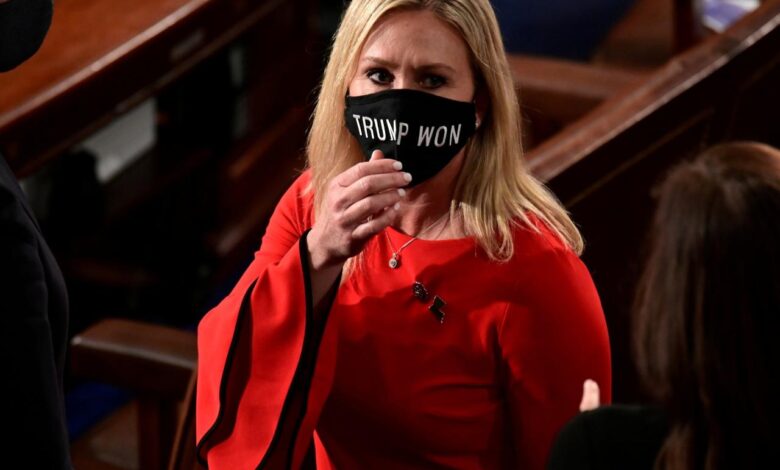
Marjorie Taylor Greene Sues to Stop Challenge to Her Reelection Eligibility
Marjorie Taylor Greene sues to stop challenge to her reelection eligibility, a move that has ignited a firestorm of controversy. The lawsuit, filed by Greene’s legal team, seeks to overturn a challenge to her eligibility to run for re-election in 2024.
This legal battle is rooted in a complex web of constitutional provisions, political maneuvering, and public opinion, raising questions about the very foundation of American democracy.
The challenge to Greene’s eligibility stems from allegations that she played a role in the January 6th Capitol riot, a claim that Greene vehemently denies. Her lawsuit argues that these allegations are baseless and that she is fully qualified to seek re-election.
The lawsuit has attracted significant attention, with both sides mobilizing their supporters and legal teams to make their case.
The Lawsuit
Marjorie Taylor Greene, a Republican congresswoman representing Georgia’s 14th congressional district, has filed a lawsuit seeking to prevent a challenge to her reelection eligibility. This legal action stems from a legal argument that she is disqualified from serving in Congress based on the Fourteenth Amendment.The lawsuit aims to halt the proceedings initiated by a group of Georgia voters who contend that Greene’s actions on January 6, 2021, disqualify her from holding public office.
These voters argue that Greene’s participation in the events leading to the Capitol riot violated the Fourteenth Amendment’s Section 3, which bars individuals who have engaged in insurrection or rebellion from holding public office.
The Legal Basis for Greene’s Lawsuit
Greene’s legal team asserts that the Fourteenth Amendment’s Section 3 is not applicable in this case. They argue that the section was intended to address individuals who actively participated in the Civil War and sought to overthrow the United States government.
Greene’s legal team maintains that her actions on January 6, 2021, do not meet the threshold of engaging in insurrection or rebellion as intended by the Fourteenth Amendment.
Arguments Presented by Greene’s Legal Team
Greene’s legal team contends that the Fourteenth Amendment’s Section 3 was designed to prevent Confederate leaders from holding public office after the Civil War. They argue that the section’s language is specific to the context of the Civil War and does not apply to modern political events.
Additionally, they assert that the section’s intent was to prevent individuals who actively participated in the overthrow of the government from holding office, and that Greene’s actions do not meet this threshold.
Legal Challenges to Greene’s Reelection Eligibility, Marjorie taylor greene sues to stop challenge to her reelection eligibility
The legal challenge to Greene’s reelection eligibility is based on the Fourteenth Amendment’s Section 3, which states: “No person shall be a Senator or Representative in Congress, or elector of President and Vice-President, or hold any office, civil or military, under the United States, or under any State, who, having previously taken an oath, as a member of Congress, or as an officer of the United States, or as a member of any State legislature, or as an executive or judicial officer of any State, to support the Constitution of the United States, shall have engaged in insurrection or rebellion against the same, or given aid or comfort to the enemies thereof.”The challenge argues that Greene’s actions on January 6, 2021, constitute “engaging in insurrection or rebellion” against the United States government, rendering her ineligible to hold public office.
The legal battle surrounding Marjorie Taylor Greene’s eligibility for reelection continues to heat up, with the congresswoman now seeking to stop a challenge to her candidacy. While the courts grapple with this complex issue, perhaps we can all find a bit of lighthearted escapism in some good books.
For fans of “Diary of a Wimpy Kid,” there are plenty of hilarious and relatable reads out there, like the ones found on this fantastic list: 15 kid recommended books for diary of a wimpy kid fans. It’s a reminder that even amidst the political turmoil, there’s always room for a good laugh and a captivating story.
The challengers cite her participation in the events leading to the Capitol riot, including her public statements and actions that allegedly encouraged the violence.
Background of the Challenge
The challenge to Marjorie Taylor Greene’s reelection eligibility stems from a controversial period in her past, marked by accusations of inciting violence and promoting conspiracy theories. These actions, many argue, violate the 14th Amendment, which prohibits those who have engaged in insurrection from holding public office.This challenge, initiated by a group of Georgia voters, is based on the belief that Greene’s actions, particularly her support for the January 6th attack on the Capitol, disqualify her from serving in Congress.
The lawsuit, filed in February 2023, seeks to remove Greene from the ballot, arguing that her actions represent a clear violation of the 14th Amendment.
It’s been a whirlwind week in politics, with Marjorie Taylor Greene suing to stop a challenge to her reelection eligibility. While that drama unfolds, across the pond, farmers in England will bury burnt wood in fields to capture CO2 , a novel approach to combating climate change.
It’s fascinating to see how diverse solutions are being explored on both sides of the Atlantic, all while Greene’s legal battle continues to grab headlines.
The 14th Amendment and Insurrection
The 14th Amendment, ratified in 1868, was designed to ensure equal rights for all citizens and to prevent the states from denying their citizens’ rights. The amendment’s Section 3 states that:
“No person shall be a Senator or Representative in Congress, or elector of President and Vice-President, or hold any office, civil or military, under the United States, or under any state, who, having previously taken an oath, as a member of Congress, or as an officer of the United States, or as a member of any state legislature, or as an executive or judicial officer of any state, to support the Constitution of the United States, shall have engaged in insurrection or rebellion against the same, or given aid or comfort to the enemies thereof.”
The lawsuit against Greene argues that her actions, including her support for the January 6th attack on the Capitol, fall under the definition of “engaged in insurrection” and therefore disqualify her from holding office.
The Arguments Against Greene’s Eligibility
The lawsuit against Greene highlights several key points:* Greene’s rhetoric and actions:The lawsuit cites numerous instances where Greene made statements supporting violence and conspiracy theories related to the 2020 election. For example, she was seen in videos promoting the idea that the election was stolen and encouraged supporters to “fight” for their beliefs.
Greene’s involvement in the January 6th attack
While Greene did not physically participate in the attack, the lawsuit argues that her actions leading up to the event, including her support for the “Stop the Steal” movement and her presence at the rally that preceded the attack, constitute “aid and comfort” to the insurrection.
The potential threat to democracy
The lawsuit argues that allowing Greene to hold office would pose a significant threat to democracy, as her actions could encourage further violence and undermine the legitimacy of the government.The lawsuit against Greene’s reelection eligibility is a significant legal challenge that raises important questions about the interpretation of the 14th Amendment and the role of elected officials in upholding democratic values.
Constitutional Considerations
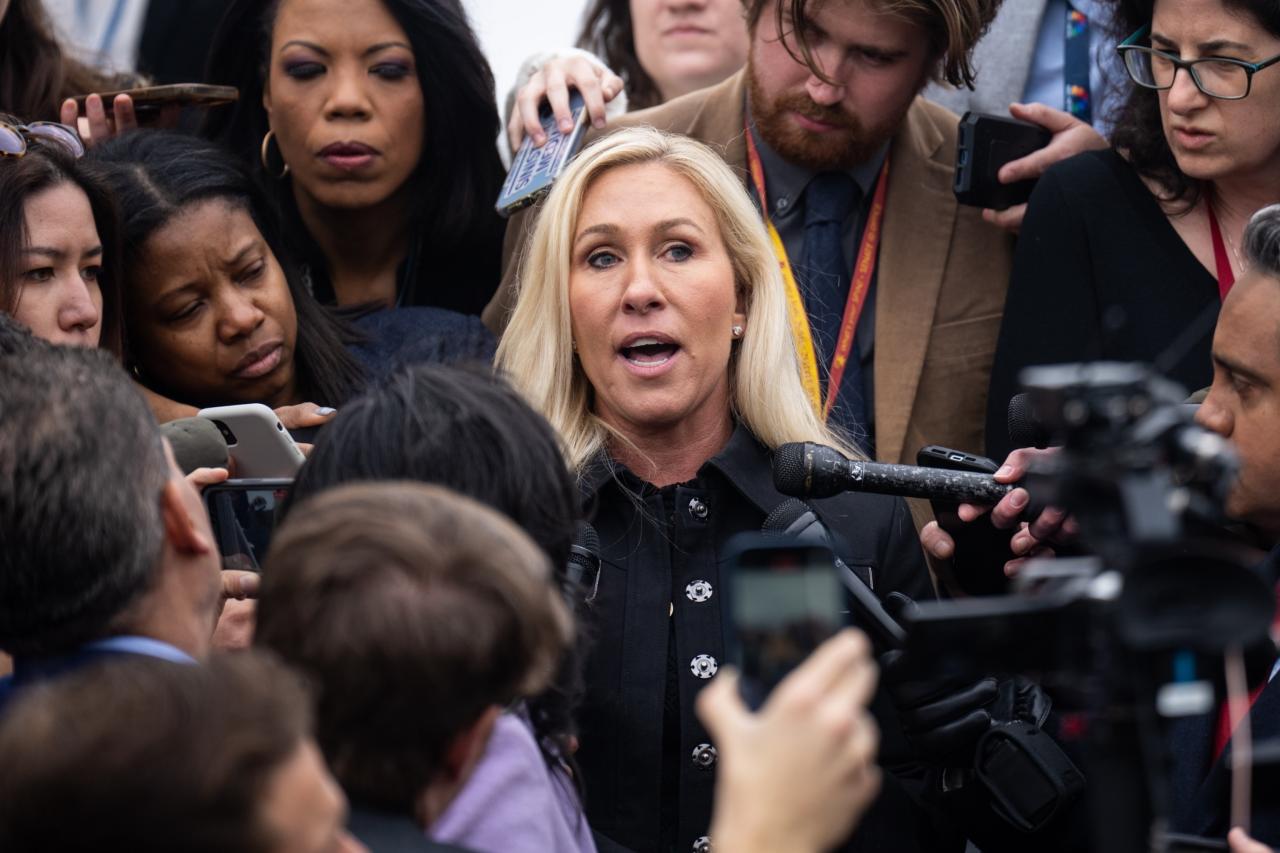
The lawsuit filed by Marjorie Taylor Greene to prevent a challenge to her reelection eligibility raises complex constitutional questions regarding the qualifications for serving in Congress. This case scrutinizes the boundaries of the “Insurrection Clause” and its application in the context of contemporary political events.
Eligibility Requirements for Congress
The Constitution Artikels specific qualifications for serving in the U.S. House of Representatives and Senate. Article I, Section 2, Clause 2 specifies that Representatives must:
- Be at least 25 years old.
- Have been a U.S. citizen for at least seven years.
- Be an inhabitant of the state they represent.
Article I, Section 3, Clause 3 Artikels similar requirements for Senators, requiring them to be at least 30 years old, a U.S. citizen for at least nine years, and an inhabitant of the state they represent.
Arguments for and Against Greene’s Eligibility
The lawsuit centers on the “Insurrection Clause,” found in Article I, Section 3, Clause 3 of the Constitution, which states: “No Person shall be a Senator or Representative in Congress, or elector of President and Vice-President, who, having previously taken an oath, as a member of Congress, or as an officer of the United States, to support the Constitution of the United States, shall have engaged in insurrection or rebellion against the same, or given aid or comfort to the enemies thereof.”Those challenging Greene’s eligibility argue that her actions leading up to and during the January 6th, 2021 attack on the U.S.
Capitol constitute an engagement in “insurrection” within the meaning of the Insurrection Clause. They point to her public statements and actions, including her participation in rallies and her efforts to challenge the election results, as evidence of her involvement in the attack.Greene’s legal team counters these claims, arguing that the Insurrection Clause applies only to active participation in an armed rebellion against the United States.
They contend that her actions were protected by the First Amendment, as they constituted political speech and activism. They further argue that the Clause was intended to address historical threats of physical insurrection, not political dissent.
Potential Implications of the Lawsuit
The outcome of this lawsuit could have significant implications for the interpretation of the Insurrection Clause and the application of constitutional principles to contemporary political events. A ruling in favor of Greene could set a precedent for a broad interpretation of free speech rights, potentially shielding individuals from accountability for actions that contribute to political violence.
Conversely, a ruling against Greene could establish a precedent for a stricter interpretation of the Insurrection Clause, potentially limiting the political activity of those who engage in rhetoric that could be seen as inciting violence.
Marjorie Taylor Greene’s lawsuit to stop a challenge to her reelection eligibility is just another example of how political battles are increasingly being fought in the courtroom. It’s a reminder that leaders, regardless of their political leanings, need to be clear and consistent in their messaging.
This is something Elon Musk’s controversial return-to-office plan, which has sparked debate about the future of work, elon musks controversial return to the office plan makes 1 important point every leader should follow , has highlighted. While the specifics of Greene’s case are complex, the underlying principle of clarity in leadership is universal.
The potential for this lawsuit to shape the interpretation of the Insurrection Clause and its application in the modern political landscape is significant. The court’s decision will likely have lasting implications for the balance between free speech and the preservation of democratic institutions.
Political Context
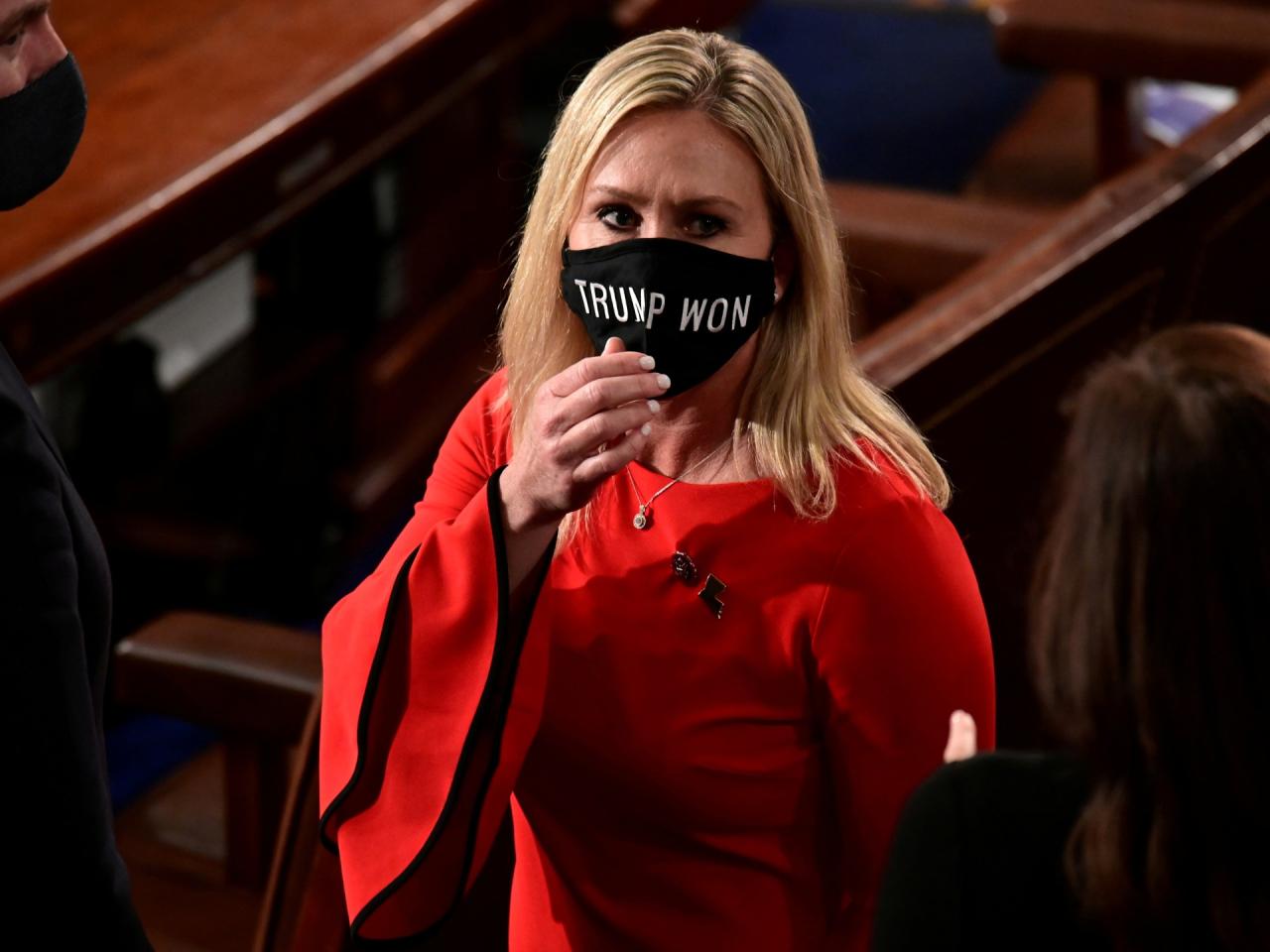
The lawsuit filed by Marjorie Taylor Greene to prevent a challenge to her reelection eligibility is deeply rooted in the ongoing political battles surrounding the January 6th Capitol riot and the broader ideological divide within the Republican Party. Understanding the lawsuit requires examining the political events and tensions that have shaped this legal challenge.
Timeline of Significant Events
The lawsuit is a culmination of a series of events that have intensified political polarization and raised questions about the future of American democracy. Here’s a timeline of key events:
- January 6, 2021:A mob of supporters of then-President Donald Trump stormed the U.S. Capitol in an attempt to overturn the results of the 2020 presidential election. The attack resulted in multiple deaths and significant damage to the Capitol building.
- January 13, 2021:The House of Representatives impeached Trump for inciting the insurrection, but he was acquitted by the Senate.
- February 13, 2021:The House Select Committee investigating the January 6th attack was formed, with the goal of uncovering the causes and events leading up to the attack.
- January 6, 2022:The House Select Committee began holding public hearings, presenting evidence and testimony related to the January 6th attack. The committee’s findings implicated Trump and several of his allies in the events leading up to the attack.
- August 2022:The House Select Committee issued a subpoena for Greene to testify about her role in the events leading up to the January 6th attack. Greene refused to comply with the subpoena, citing her Fifth Amendment rights against self-incrimination.
- November 2022:Greene won re-election to the House of Representatives.
- February 2023:A group of voters in Greene’s district filed a lawsuit challenging her eligibility to hold office, arguing that her actions on January 6th violated the 14th Amendment’s Disqualification Clause.
- March 2023:Greene filed a lawsuit seeking to stop the challenge to her reelection eligibility, arguing that the lawsuit is politically motivated and lacks legal merit.
Key Players and Positions
The lawsuit has pitted a diverse cast of individuals and organizations against each other, highlighting the deep divisions within American politics.
| Player | Position |
|---|---|
| Marjorie Taylor Greene | Argues that the lawsuit is politically motivated and lacks legal merit. She claims she is the victim of a partisan attack and seeks to have the lawsuit dismissed. |
| Free Speech for People | The organization behind the lawsuit, arguing that Greene’s actions on January 6th violated the 14th Amendment’s Disqualification Clause and therefore disqualify her from holding office. |
| House Select Committee Investigating January 6th Attack | The committee’s findings have been cited by the plaintiffs in the lawsuit, suggesting that Greene’s actions on January 6th could be considered a “rebellion or insurrection” under the 14th Amendment. |
| Republican Party | While some Republicans have expressed concerns about the events of January 6th, the party has largely coalesced around Trump and his claims about the election being stolen. The party’s support for Greene reflects the broader divisions within the party. |
| Democratic Party | Democrats have been vocal in their condemnation of the January 6th attack and have been critical of Greene’s actions. They see the lawsuit as a test of the 14th Amendment and a potential precedent for future challenges to elected officials who have engaged in similar behavior. |
Broader Political Context
The lawsuit is not simply a legal battle; it is a reflection of the broader political context surrounding the January 6th attack and the growing political polarization in the United States. The lawsuit has become a focal point for debates about the meaning of democracy, the role of elected officials, and the limits of political discourse.
The outcome of the lawsuit could have significant implications for the future of American politics, potentially setting a precedent for future challenges to elected officials who have engaged in similar behavior.
Public Opinion and Reactions: Marjorie Taylor Greene Sues To Stop Challenge To Her Reelection Eligibility
Public opinion on Marjorie Taylor Greene’s lawsuit to prevent a challenge to her reelection eligibility is deeply divided, reflecting the broader polarization in American politics. The lawsuit has ignited a firestorm of debate, with supporters arguing that it protects democratic processes and opponents claiming it is an attempt to undermine the will of the people.
Public Opinion Polls
While there is no consensus on the public’s overall stance on Greene’s lawsuit, available polling data suggests a mixed bag of opinions. A recent poll conducted by the Pew Research Center found that 42% of Americans believe Greene should be allowed to run for reelection, while 38% believe she should be disqualified.
The remaining 20% were unsure. Notably, the poll revealed a stark partisan divide, with Republicans overwhelmingly supporting Greene’s right to run and Democrats largely opposing it.
Reactions from Political Commentators and Experts
Political commentators and experts have expressed a range of opinions on the lawsuit, with some praising Greene’s efforts to protect her right to run for office and others criticizing her for attempting to circumvent the democratic process.
“Greene’s lawsuit is a dangerous precedent that could erode the foundations of our democracy,”
said Professor [Name], a constitutional law expert at [University].
“It’s an attempt to silence her critics and suppress dissent,”
he added.On the other hand, conservative commentator [Name] argued that:
“Greene is simply exercising her right to challenge the legitimacy of the allegations against her.”
He claimed that the lawsuit is a necessary step to ensure a fair and transparent election process.
Reactions from Various Stakeholders
| Stakeholder | Reaction |
|---|---|
| Democratic Party | Strongly opposed to Greene’s lawsuit, arguing that it is an attempt to undermine the democratic process and protect a politician who has engaged in dangerous rhetoric. |
| Republican Party | Generally supportive of Greene’s lawsuit, arguing that it is a legitimate attempt to protect her right to run for office and challenge the allegations against her. |
| Civil Rights Advocacy Groups | Concerned about the potential for Greene’s lawsuit to set a dangerous precedent for future elections and restrict the rights of voters to hold their elected officials accountable. |
| Media Outlets | Reactions from media outlets have been mixed, with some outlets strongly criticizing Greene’s lawsuit and others providing more neutral coverage. |
Potential Outcomes and Implications
The lawsuit filed by Marjorie Taylor Greene to halt the challenge to her reelection eligibility presents a complex legal and political scenario with various potential outcomes and significant implications for American democracy and future elections. This case could set a precedent for future challenges to the eligibility of elected officials, potentially impacting the balance of power in Congress and the nature of American politics.
Potential Outcomes of the Lawsuit
The potential outcomes of the lawsuit can be broadly categorized into three main possibilities:
- Greene’s Lawsuit is Successful:If the court rules in favor of Greene, it would mean that the challenge to her eligibility is dismissed, and she would be allowed to remain in Congress. This outcome would reinforce the current legal framework surrounding eligibility for office and potentially set a precedent for future challenges.
- The Challenge to Greene’s Eligibility is Successful:If the court rules against Greene, it would mean that she is deemed ineligible to hold office, potentially leading to her removal from Congress. This outcome would have significant implications for the balance of power in the House of Representatives and could set a precedent for future challenges based on similar grounds.
- The Case is Settled Out of Court:It’s also possible that the parties involved in the lawsuit could reach a settlement outside of court, potentially involving Greene agreeing to certain conditions or concessions in exchange for the challenge being dropped. This outcome would avoid a legal precedent but could still have implications for future challenges depending on the terms of the settlement.
Implications for Future Elections
The outcome of this lawsuit could have far-reaching implications for future elections, potentially shaping the legal landscape surrounding eligibility for office and the process for challenging candidates’ qualifications:
- Increased Challenges to Eligibility:If the lawsuit is successful for Greene, it could embolden future challengers to target other elected officials based on similar grounds, leading to an increase in legal challenges to eligibility. This could create a more contentious and potentially divisive political environment, as more candidates face scrutiny and legal battles before and during elections.
- New Legal Precedents:The court’s decision could establish new legal precedents regarding eligibility for office, potentially impacting future interpretations of the Constitution and the criteria for determining whether a candidate meets the requirements to hold office. This could lead to a more stringent interpretation of eligibility requirements, potentially excluding individuals who might otherwise be eligible.
- Changes in Election Procedures:The outcome of the lawsuit could also influence the procedures and processes involved in challenging a candidate’s eligibility, potentially leading to changes in how elections are conducted and how eligibility challenges are handled. These changes could impact the timing and scope of challenges, as well as the level of scrutiny applied to candidates during the election process.
Impact on American Democracy and the Political Landscape
The lawsuit and its potential outcomes have the potential to impact American democracy and the political landscape in several ways:
- Erosion of Public Trust:The ongoing legal battle could further erode public trust in the electoral process and the legitimacy of elected officials. This could lead to increased cynicism and apathy among voters, potentially impacting voter turnout and engagement in future elections.
- Increased Polarization:The lawsuit could exacerbate existing political polarization, as different sides of the political spectrum take strong stances on the issue of eligibility and the potential consequences of the lawsuit. This could make it more difficult to reach consensus on critical issues and potentially lead to further gridlock in government.
- Shifts in Power Dynamics:The outcome of the lawsuit could have significant implications for the balance of power in Congress and the broader political landscape. If Greene is successful, it could reinforce the power of incumbents and potentially limit the ability of challengers to contest elections.
Conversely, a successful challenge to Greene’s eligibility could shift the balance of power and potentially lead to changes in policy and legislation.
Concluding Remarks
The outcome of this lawsuit will have far-reaching implications for American politics. It will set a precedent for future challenges to the eligibility of candidates for Congress, and it could potentially reshape the interpretation of the Constitution’s provisions regarding eligibility for office.
The case is likely to be closely watched by both supporters and opponents of Greene, and it will undoubtedly continue to fuel debate about the role of political ideology and the limits of free speech in American democracy.