
Even Fox Doesnt Buy Rick Scotts Tax Plan Claim
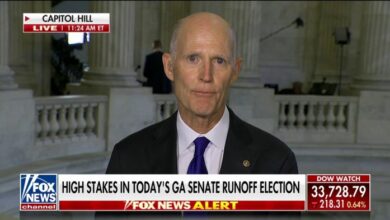
Even fox doesnt buy it when rick scott claims his plan doesnt raise taxes on a majority of americans – Even Fox Doesn’t Buy Rick Scott’s Tax Plan Claim, and that’s saying something. Rick Scott, the former Florida governor and current Republican senator, has proposed a tax plan that he claims won’t raise taxes on the majority of Americans. But even Fox News, a media outlet often aligned with Republicans, has expressed skepticism about this assertion.
This raises serious questions about the plan’s true impact and its potential consequences for the American people.
Scott’s plan proposes significant tax cuts for corporations and high-income earners, while raising taxes on low- and middle-income families. This approach has been criticized by many economists and policy experts, who argue that it will exacerbate income inequality and weaken the social safety net.
The plan also raises concerns about its impact on government revenue, which could lead to cuts in essential services like education, healthcare, and infrastructure.
Rick Scott’s Tax Plan
Rick Scott, a Republican senator from Florida, has proposed a tax plan that he claims would not raise taxes on the majority of Americans. However, many experts have disputed this claim, arguing that the plan would actually lead to significant tax increases for many individuals and families, particularly those with lower and middle incomes.
Key Provisions of Rick Scott’s Tax Plan
Scott’s tax plan proposes a number of significant changes to the current tax code. Some of the key provisions include:
- Sunset all federal taxes after five years.This provision would require Congress to reauthorize all federal taxes every five years.
- Require all Americans to pay at least some federal income tax.Currently, many Americans, particularly those with lower incomes, do not pay federal income tax. Scott’s plan would require everyone to pay at least some federal income tax, regardless of their income level.
- Eliminate the standard deduction.The standard deduction allows taxpayers to deduct a certain amount of income from their taxable income. Scott’s plan would eliminate this deduction, which would increase the taxable income of many individuals and families.
- Increase the standard deduction for seniors.Scott’s plan would increase the standard deduction for seniors, which could offset some of the negative impacts of eliminating the standard deduction for other taxpayers.
- Eliminate the estate tax.The estate tax is a tax on the transfer of assets from a deceased person to their heirs. Scott’s plan would eliminate this tax, which would benefit wealthy individuals and families.
Potential Impact on Different Income Groups
The impact of Rick Scott’s tax plan on different income groups would vary depending on the specific provisions of the plan and how they are implemented. However, it is generally expected that the plan would disproportionately benefit higher-income earners while potentially increasing the tax burden on lower- and middle-income earners.
It’s getting harder and harder to believe politicians, especially when they make claims that seem so out of touch with reality. Take Rick Scott’s tax plan, for example – even Fox News isn’t buying his claim that it won’t raise taxes on most Americans.
And speaking of questionable claims, a retired general is now under investigation for undisclosed lobbying for Qatar. It seems like these days, you can’t trust anyone to tell the truth, even when it comes to something as basic as tax policy.
Maybe it’s time we start demanding more transparency from our elected officials.
- Higher-income earnersare likely to benefit from the elimination of the estate tax and the increased standard deduction for seniors. They would also likely benefit from the sunset provision, which could lead to lower taxes in the long run.
- Lower- and middle-income earnerswould likely face a higher tax burden under Scott’s plan. They would be impacted by the elimination of the standard deduction, the requirement to pay at least some federal income tax, and the potential for higher taxes in the long run due to the sunset provision.
It’s becoming increasingly clear that Rick Scott’s tax plan is nothing but smoke and mirrors. Even Fox News, the network that usually bends over backward to support Republicans, has called out his claim that the plan won’t raise taxes on most Americans.
It’s a blatant lie, and it’s only a matter of time before the public sees through it. Sen. Kevin Cramer would be well-advised to distance himself from this harmful proposal, as it’s likely to backfire spectacularly in the upcoming elections.
Rationale Behind the Plan
Rick Scott has stated that his tax plan is designed to simplify the tax code, boost economic growth, and create jobs. He argues that the plan would reduce the size and scope of government, which would lead to lower taxes and a more competitive economy.
Potential Economic Consequences of the Plan, Even fox doesnt buy it when rick scott claims his plan doesnt raise taxes on a majority of americans
The potential economic consequences of Rick Scott’s tax plan are a subject of debate among economists. Some economists argue that the plan would stimulate economic growth by increasing investment and job creation. Others argue that the plan would lead to higher deficits and slower economic growth, particularly in the long run.
- Potential positive economic consequencesinclude increased investment, job creation, and economic growth. These benefits would likely be driven by the tax cuts for businesses and individuals, which could lead to increased consumer spending and business investment.
- Potential negative economic consequencesinclude higher deficits, slower economic growth, and increased inequality. These negative consequences could be driven by the tax cuts for higher-income earners, which could lead to increased wealth inequality and reduced government revenue.
Analyzing the Claim: Even Fox Doesnt Buy It When Rick Scott Claims His Plan Doesnt Raise Taxes On A Majority Of Americans

Rick Scott’s assertion that his tax plan “doesn’t raise taxes on a majority of Americans” is a bold claim, often repeated by proponents of the plan. However, a closer examination reveals a more nuanced reality, highlighting the complexities of tax policy and its impact on different segments of the population.
Tax Cuts and Changes
The core of Scott’s plan centers on reducing the federal income tax rate for all Americans to 25%, eliminating the estate tax, and simplifying the tax code. While these changes might initially seem appealing, particularly the promise of lower taxes, the devil lies in the details.
It’s pretty clear that Rick Scott’s tax plan is just smoke and mirrors. Even Fox News is calling him out on it, and that’s saying something! While we’re on the topic of things that aren’t quite what they seem, u s intelligence is helping ukraine kill russian generals officials say which is a whole other level of deception.
But back to Scott, the man who claims his plan won’t raise taxes on the majority of Americans? Yeah, that’s not exactly true either.
The plan also proposes significant cuts to federal spending, which could necessitate further tax increases or reductions in essential services.
Comparing Tax Burdens
Analyzing the impact of the plan on different income brackets requires comparing the current tax system with the proposed system. The current system, with its progressive tax structure, places a higher tax burden on higher earners. Scott’s plan, by lowering the flat rate to 25%, would reduce the tax burden for high-income earners while potentially increasing it for lower-income earners who rely on government programs and services.
For instance, a family earning $50,000 annually might see a small tax reduction under Scott’s plan, but they could also experience cuts to essential programs like Medicare and Medicaid, effectively negating the tax benefit.
Impact on Government Revenue
The potential impact of Scott’s plan on government revenue is a critical consideration. The plan’s proponents argue that the economic growth spurred by lower taxes would offset any revenue loss. However, this claim relies on untested assumptions about economic growth and the effectiveness of tax cuts as a stimulus.
Economic models vary widely in their predictions, and the actual impact on government revenue remains uncertain.
Examining the “Even Fox Doesn’t Buy It” Statement
The assertion that even Fox News, a network known for its conservative leanings, has expressed skepticism towards Rick Scott’s tax plan, adds weight to the argument that the plan’s claims of not raising taxes on a majority of Americans might be misleading.
This skepticism, while not universal within Fox News, has been evident in various commentaries and reports, raising questions about the plan’s feasibility and potential impact.
Reasons Behind Fox News’s Skepticism
Fox News’s skepticism towards Rick Scott’s tax plan stems from a combination of political and economic factors.
- One key reason is the plan’s potential impact on the national debt. Fox News commentators have expressed concerns that the plan’s proposed tax cuts, particularly for high-income earners and corporations, could significantly increase the federal deficit. They argue that this could lead to future economic instability and necessitate further tax increases down the line, potentially impacting those very Americans the plan claims to protect.
- Another factor is the potential for the plan to disproportionately benefit the wealthy. While Scott’s plan aims to simplify the tax code and lower rates for all Americans, some Fox News analysts have argued that the largest benefits would accrue to the top earners.
This raises concerns about the plan’s fairness and its potential to exacerbate income inequality.
- Furthermore, some Fox News commentators have questioned the plan’s economic impact, arguing that the proposed tax cuts may not lead to the promised economic growth. They point to historical examples where tax cuts have failed to stimulate the economy as intended, and they express concerns that the plan’s focus on tax reductions could come at the expense of investments in critical areas like infrastructure and education.
Implications of Fox News’s Stance
Fox News’s skepticism towards Rick Scott’s tax plan has significant implications for the plan’s credibility and public perception. The fact that even a network traditionally aligned with Republican policies has raised doubts about the plan’s feasibility and fairness could undermine its support among both Republicans and independents.
This skepticism could also lead to greater scrutiny of the plan’s details and potential consequences, potentially impacting its chances of gaining widespread support and implementation.
The Role of Tax Policy in American Society
Tax policy is a fundamental aspect of American society, shaping the economy, influencing the distribution of wealth, and impacting the lives of every citizen. It’s a complex and often controversial topic, with diverse perspectives on its goals, methods, and consequences.
The Different Philosophies and Approaches to Tax Policy in the United States
The United States has a long history of debate surrounding tax policy, with two main philosophical schools of thought:* The Progressive Tax System:This approach advocates for a tax system where higher earners pay a larger proportion of their income in taxes. The idea is to promote fairness and reduce income inequality.
The current US federal income tax system is generally progressive, with tax rates increasing as income rises.
The Regressive Tax System
This approach favors a tax system where lower earners pay a larger proportion of their income in taxes. It often involves indirect taxes like sales taxes, which disproportionately impact those with lower incomes. While not the primary focus of the US tax system, regressive taxes are still present.
The debate between these two philosophies often centers on the balance between fairness and economic growth. Supporters of progressive taxation argue that it creates a more equitable society and allows for greater investment in public services. Conversely, proponents of regressive taxation argue that it encourages economic growth by reducing the burden on businesses and individuals.
The Role of Tax Policy in Shaping the Distribution of Wealth and Income
Tax policy plays a crucial role in shaping the distribution of wealth and income in the United States. Progressive taxation, by imposing higher rates on higher earners, aims to redistribute wealth and reduce income inequality. This approach can help fund social programs, such as healthcare and education, which benefit lower-income households.
On the other hand, regressive taxes can exacerbate income inequality by placing a heavier burden on those with lower incomes. These taxes can also lead to a cycle of poverty, as lower-income households struggle to afford basic necessities and have less disposable income for savings and investment.
The Potential Consequences of Different Tax Policies on the Economy, Government Revenue, and the Overall Well-being of American Citizens
Different tax policies can have significant impacts on the economy, government revenue, and the overall well-being of American citizens. * Economic Growth:Tax cuts, particularly for businesses and high earners, are often touted as a way to stimulate economic growth. However, the effectiveness of such measures is debated, with some arguing that they can lead to increased inequality and a decline in public services.
Government Revenue
Tax policies directly impact government revenue, which funds essential services like infrastructure, education, and healthcare. A shift towards regressive taxation can lead to reduced government revenue, potentially impacting the quality and availability of these services.
Overall Well-being
Tax policies can influence the overall well-being of American citizens by affecting factors such as healthcare access, educational opportunities, and economic security. Progressive taxation, with its focus on redistribution and public investment, can potentially lead to improved well-being for lower-income households.
Summary
The fact that even Fox News has questioned Rick Scott’s claim about his tax plan is a significant development. It suggests that the plan’s true impact is not as clear-cut as Scott suggests, and that there are serious concerns about its potential consequences.
As the debate over tax policy continues, it’s crucial to consider the potential impact of different proposals on all Americans, not just those at the top. The future of our nation depends on it.