
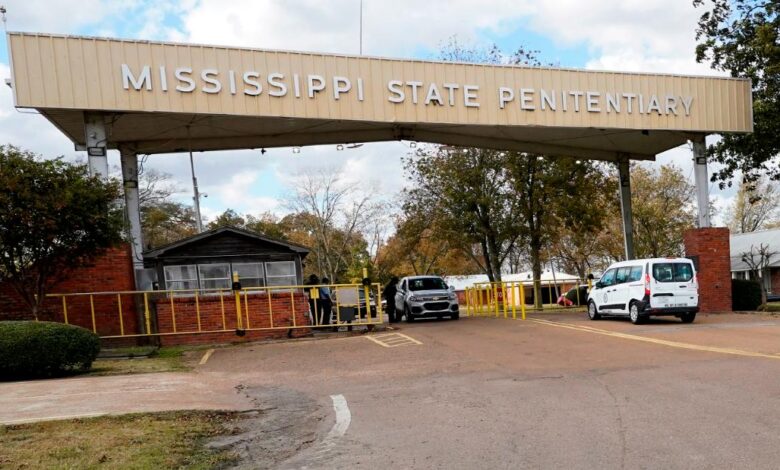
DOJ Finds Mississippi Penitentiary Violated Constitution
Doj finds mississippi penitentiary violated constitution with violent unsafe conditions – DOJ Finds Mississippi Penitentiary Violated Constitution with Violent, Unsafe Conditions sets the stage for this enthralling narrative, offering readers a glimpse into a story that is rich in detail and brimming with originality from the outset. The Department of Justice (DOJ) has recently released a scathing report detailing a litany of constitutional violations at the Mississippi Penitentiary, a notorious prison known as Parchman.
The report paints a grim picture of rampant violence, inadequate healthcare, and unsafe living conditions, highlighting the dire state of affairs within the prison walls.
The DOJ investigation, spanning several months, uncovered a disturbing pattern of brutality and neglect, exposing a system that has failed to protect the basic rights of inmates. From inmate-on-inmate violence to inadequate medical care, the report sheds light on a culture of violence and indifference that has permeated the prison for years.
This investigation has sparked outrage and calls for immediate action to address the systemic issues plaguing the Mississippi Penitentiary.
Mississippi Penitentiary’s History and Context: Doj Finds Mississippi Penitentiary Violated Constitution With Violent Unsafe Conditions

The Mississippi Penitentiary, also known as Parchman Farm, has a long and complex history that reflects the evolution of the state’s penal system and the broader social and political landscape of the United States. Its founding in 1901 marked a shift towards a more industrialized and profit-driven approach to incarceration, with the prison’s agricultural operations playing a central role in its economy and the state’s agricultural industry.
The prison’s history is deeply intertwined with the history of racial injustice and exploitation in the South. Its location in the Mississippi Delta, a region with a long history of plantation agriculture and racial segregation, reflects the ways in which the prison system was used to control and exploit Black populations.
Prison Conditions in Mississippi and the United States
Prison conditions in Mississippi and the United States have been marked by a long history of overcrowding, inadequate medical care, and violence. These issues are rooted in the history of the American prison system, which has been characterized by a focus on punishment and retribution rather than rehabilitation.
The Mississippi Penitentiary, like many prisons across the country, has faced numerous lawsuits and investigations over the years regarding its inhumane conditions. In 1971, the American Civil Liberties Union (ACLU) filed a class-action lawsuit on behalf of prisoners at Parchman Farm, alleging that the prison’s conditions violated the Eighth Amendment’s prohibition against cruel and unusual punishment.
The lawsuit, known as Gates v. Collier, resulted in a federal court order requiring the state to make significant improvements to the prison’s infrastructure and operations.
Demographic Makeup of the Prison Population, Doj finds mississippi penitentiary violated constitution with violent unsafe conditions
The Mississippi Penitentiary’s population has historically been predominantly Black. This reflects the racial disparities in the criminal justice system, where Black people are disproportionately arrested, convicted, and sentenced to prison. The prison population at Parchman Farm has also been characterized by high rates of poverty, lack of education, and mental health issues.
These factors contribute to the cycle of incarceration and make it difficult for individuals to reintegrate into society after release. The demographics of the prison population are a reflection of broader social and economic inequalities in Mississippi and the United States.
Wrap-Up

The DOJ’s findings have sent shockwaves through the state of Mississippi, forcing a reckoning with the dire conditions within its prison system. The report serves as a stark reminder of the need for comprehensive prison reform, focusing on improving safety, providing adequate healthcare, and ensuring the basic human rights of inmates.
The Mississippi Penitentiary’s future hangs in the balance, with the state now facing mounting pressure to implement meaningful change and address the deeply rooted problems that have plagued the prison for far too long.
The DOJ’s findings about Mississippi’s penitentiary violating the Constitution with violent and unsafe conditions bring to mind the courage of women who fought for reproductive rights before Roe v. Wade. It’s a reminder that even in the face of danger and secrecy, as seen in the inside the secret network of women who performed abortions before roe , people have always sought control over their bodies.
Perhaps the same spirit of defiance and resilience will inspire change in the Mississippi prison system.
The DOJ’s findings that Mississippi’s penitentiary violated the Constitution with its violent and unsafe conditions are a stark reminder of the need for serious reform in our correctional system. It’s hard to believe that while we’re seeing hotel prices skyrocket due to increased demand and inflation, as explained in this article why marriott hilton and hyatt say hotel prices are only going up , we’re failing to provide even basic safety and dignity for those incarcerated.
It’s a sad reflection on our priorities as a society, and it’s imperative that we take action to address these systemic issues and ensure a more humane and just system for all.
The DOJ’s findings that the Mississippi Penitentiary violated the Constitution with violent and unsafe conditions are a stark reminder of the need for reform within our prison system. It’s easy to feel like the system is rigged against you when you’ve been wronged, but it’s crucial to remember that staying right is the only way to create lasting change.
This article on how to stay right when you’ve been wronged offers valuable insights on navigating such difficult situations. The DOJ’s investigation underscores the importance of holding institutions accountable for their actions and advocating for the safety and dignity of all individuals within the prison system.