
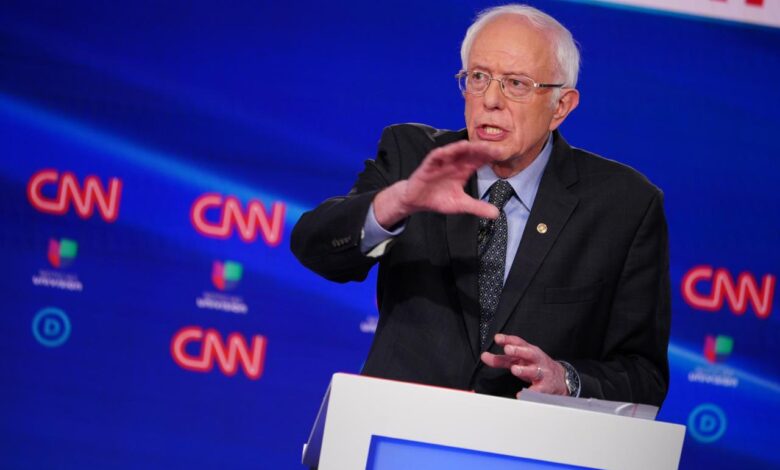
Bernie Sanders Just Terrified Corporations With 95% Windfall Tax Bill
Bernie sanders just terrified corporations with bill to impose a 95 windfall profit tax – Bernie Sanders just terrified corporations with bill to impose a 95% windfall profit tax, a bold move that has sent shockwaves through the business world. This proposed legislation targets companies that have seen record profits during the pandemic, aiming to redistribute some of that wealth back to the American people.
The idea is simple: companies that have profited immensely from the pandemic should share some of that windfall with those who are struggling.
This bill has sparked a fierce debate, with corporations arguing that it will stifle investment and job creation, while proponents argue that it is a necessary step to address income inequality and ensure that everyone benefits from economic growth. The potential impact of this tax is far-reaching, affecting not just corporate profits but also the overall economy and the lives of everyday Americans.
The Windfall Profit Tax
Senator Bernie Sanders’ proposed 95% windfall profit tax has sent shockwaves through the corporate world, raising significant questions about its potential impact and historical precedent. This tax, aimed at companies experiencing extraordinary profits due to factors beyond their control, has sparked heated debate about its fairness, effectiveness, and long-term implications.
Rationale and Target Companies
The rationale behind the windfall profit tax is to capture a portion of the extraordinary profits earned by companies during periods of economic crisis or unforeseen events. The tax is intended to be levied on companies that have benefited disproportionately from these events, often at the expense of consumers or taxpayers.
Bernie Sanders’ recent proposal to impose a 95% windfall profit tax on corporations has sent shockwaves through the business world. It’s a bold move that could drastically shift the economic landscape, reminding us that America almost took a different path toward abortion rights, as evidenced by the history of the Hyde Amendment.
While the future of Sanders’ proposal remains uncertain, it highlights the ongoing struggle for economic justice and the potential for significant change in American policy.
The proposed tax specifically targets companies in the energy sector, particularly oil and gas producers, who have seen record profits amidst rising energy prices and global instability.
Bernie Sanders’ proposed 95% windfall profit tax on corporations has sent shockwaves through Wall Street. It’s a bold move, and while it’s unlikely to pass in its current form, it’s a clear signal that the fight for economic justice is alive and well.
Meanwhile, the human cost of the war in Ukraine is ever-present, with stories like ukrainian children in U.S. custody finding unlikely sponsors as war rages back home reminding us of the very real impact of this conflict. The contrast between Sanders’ bold political stance and the human suffering in Ukraine highlights the complexities of our world, where political battles and personal tragedies collide.
Potential Impact on Corporate Profits and Financial Performance
The imposition of a 95% windfall profit tax could have a significant impact on the profits and financial performance of targeted companies. The tax would effectively reduce their net income, potentially leading to lower dividend payouts to shareholders and reduced investment in future projects.
This could also affect their ability to raise capital and compete effectively in the market.
Historical Overview of Windfall Profit Taxes
Windfall profit taxes have been implemented in various countries throughout history, often in response to economic crises or sudden surges in commodity prices. One notable example is the “windfall profits tax” imposed by the United States government on oil companies in the 1980s.
This tax was designed to capture a portion of the profits earned by oil companies during a period of high oil prices. However, the tax was eventually repealed, with critics arguing that it discouraged investment and ultimately did not achieve its intended goals.
Bernie Sanders’ proposed 95% windfall profit tax on corporations is causing quite a stir. It’s a bold move, one that could shake up the current economic landscape and inspire a whole new wave of corporate responsibility. Forget the Great Resignation, forget the great resignation bring on the great reimagination , this could be the start of the Great Reimagination.
Maybe corporations will finally realize that their profits don’t have to come at the expense of their workers and the environment. Sanders’ bill might be a shot in the arm for real change, forcing corporations to reconsider their priorities and embrace a more equitable model.
“The tax is intended to capture a portion of the extraordinary profits earned by companies during periods of economic crisis or unforeseen events.”
Corporate Reactions and Perspectives
The proposed 95% windfall profit tax has sparked a wave of reactions from corporations across various sectors. While some companies acknowledge the need for increased government revenue and argue that the tax is fair, others view it as an unfair burden that will hinder investment and economic growth.
This section explores the diverse viewpoints and potential economic implications of this proposed legislation.
Potential Economic Consequences
The proposed windfall profit tax has raised concerns about its potential economic consequences, particularly regarding corporate behavior. Critics argue that the tax will disincentivize investment, leading to reduced job creation and innovation. They contend that corporations will be less likely to invest in new projects or expand existing operations, fearing that the windfall profit tax will erode their profits.
This could lead to a slowdown in economic growth and a decrease in overall productivity. Proponents, however, argue that the tax is necessary to address income inequality and ensure that corporations contribute their fair share to society. They believe that the tax will not significantly impact corporate investment decisions, as the tax is only applicable to profits above a certain threshold.
Moreover, they argue that the tax will generate significant revenue that can be used to fund essential public services and programs, ultimately benefiting the economy.
Industry Sector Perspectives
Different industry sectors have expressed varying degrees of concern about the proposed windfall profit tax. The energy sector, which has seen significant profits due to rising oil and gas prices, has been particularly vocal in its opposition to the tax.
Energy companies argue that the tax is unfair and will discourage investment in new energy projects, ultimately hindering the transition to cleaner energy sources. Conversely, the technology sector, which has also experienced significant profits in recent years, has been more receptive to the idea of a windfall profit tax.
Some tech companies argue that the tax is a necessary step to address income inequality and ensure that corporations contribute their fair share to society. They believe that the tax will not significantly impact their operations and that the revenue generated can be used to fund important social programs and infrastructure projects.
Arguments For and Against the Tax
Corporations have presented various arguments for and against the proposed windfall profit tax. Proponents argue that the tax is fair and necessary to address income inequality and ensure that corporations contribute their fair share to society. They point to the fact that many corporations have seen record profits in recent years, while many Americans are struggling with rising inflation and stagnant wages.
Proponents also argue that the tax will generate significant revenue that can be used to fund essential public services and programs, such as healthcare, education, and infrastructure. Conversely, opponents argue that the tax is unfair and will discourage investment, leading to reduced job creation and innovation.
They contend that the tax will create uncertainty for businesses, making them hesitant to invest in new projects or expand existing operations. Opponents also argue that the tax will ultimately harm consumers, as businesses will pass on the cost of the tax to consumers in the form of higher prices.
Political and Economic Context
The proposed 95% windfall profit tax on corporations has sparked intense political debate, reflecting a broader societal tension between economic fairness and corporate interests. Proponents argue that the tax is a necessary measure to address the growing economic inequality exacerbated by the recent surge in corporate profits, particularly in energy and oil industries.
Motivations and Goals of Proponents
Proponents of the windfall profit tax, primarily progressive Democrats and certain labor unions, view it as a means to achieve multiple objectives.
- Redistribute Wealth:The tax aims to recapture a significant portion of the extraordinary profits earned by corporations during a period of high inflation and energy price increases. This redistribution of wealth, they argue, would help alleviate the financial burdens on working families and individuals struggling with rising costs of living.
- Fund Public Programs:Proponents see the tax revenue as a critical source for funding essential public programs, such as infrastructure improvements, education, and healthcare. They contend that investing in these areas will stimulate economic growth and improve the quality of life for all Americans.
- Discourage Price Gouging:By imposing a substantial tax on excessive profits, proponents believe that corporations will be less inclined to engage in price gouging practices. This, they argue, will help stabilize prices and reduce inflationary pressures.
Potential Economic Implications
The economic impact of the windfall profit tax is a subject of much debate, with proponents and opponents offering contrasting perspectives.
- Inflation:Proponents argue that the tax could help curb inflation by reducing corporate profits and thereby limiting their ability to pass on higher prices to consumers. Opponents, however, argue that the tax could actually increase inflation by discouraging investment and production, leading to supply shortages and further price increases.
- Economic Growth:Proponents contend that the tax could stimulate economic growth by providing funding for essential public programs that boost productivity and create jobs. Opponents counter that the tax would hinder economic growth by reducing corporate profits and discouraging investment, leading to job losses and slower economic expansion.
- Government Revenue:The tax is projected to generate substantial revenue for the government, which proponents argue could be used to address critical social and economic needs. Opponents, however, express concerns that the tax would be difficult to implement and enforce effectively, potentially leading to revenue shortfalls and undermining the intended benefits.
Challenges and Obstacles to Implementation
The implementation of the windfall profit tax faces numerous challenges, including legal, political, and logistical considerations.
- Legal Challenges:The constitutionality of the tax could be challenged in court, particularly on grounds of exceeding the government’s taxing power or violating the Fifth Amendment’s takings clause. The tax could also be subject to legal challenges related to its definition of “windfall profits” and the methodology for calculating the tax.
- Political Obstacles:The tax faces significant political opposition from Republicans and some moderate Democrats, who argue that it would harm the economy and discourage investment. The political climate could make it difficult to secure the necessary votes for passage and implementation.
- Logistical Considerations:The tax would require complex regulations and enforcement mechanisms to ensure accurate calculation and collection of the tax from corporations. This could involve significant administrative costs and create challenges for both the government and the corporations subject to the tax.
Public Opinion and Social Impact: Bernie Sanders Just Terrified Corporations With Bill To Impose A 95 Windfall Profit Tax
The proposed windfall profit tax on corporations has sparked a heated debate, with public opinion divided on its merits and potential consequences. While some see it as a necessary measure to address corporate greed and contribute to public good, others express concerns about its impact on economic growth and consumer prices.
Public Sentiment and Key Arguments
Public sentiment towards the windfall profit tax is largely influenced by political affiliations and economic perspectives.
- Supportersargue that the tax is a fair and equitable way to ensure that corporations share the burden of the current economic crisis, particularly as they have benefited from record profits during a period of hardship for many Americans. They highlight the need for increased government revenue to address pressing social issues such as healthcare, education, and infrastructure.
Supporters also point to the potential for the tax to incentivize corporations to invest in more sustainable and socially responsible practices.
- Opponentsargue that the tax will stifle investment, deter economic growth, and ultimately harm consumers through higher prices. They contend that corporations will pass on the cost of the tax to consumers, leading to inflation and a decrease in disposable income.
Additionally, they argue that the tax is unfair, as it penalizes companies that have been successful in a competitive market.
Potential Impact on Consumer Prices and Cost of Living
The potential impact of the windfall profit tax on consumer prices is a complex issue.
- Proponentsargue that the tax will have a minimal impact on consumer prices, as corporations are already operating with significant profit margins. They contend that the tax will primarily affect corporate profits, not consumer costs. They point to examples of similar taxes implemented in other countries, where the impact on consumer prices has been negligible.
- Opponentsargue that the tax will inevitably lead to higher prices for consumers. They contend that corporations will pass on the cost of the tax to consumers in the form of higher prices for goods and services. They cite examples of companies that have raised prices in response to increased costs, such as fuel taxes or labor shortages.
Social and Economic Consequences, Bernie sanders just terrified corporations with bill to impose a 95 windfall profit tax
The windfall profit tax could have significant social and economic consequences, particularly for different socioeconomic groups.
- Potential for Exacerbating Inequalities: The tax could exacerbate existing inequalities by disproportionately impacting lower-income households, who spend a larger percentage of their income on essential goods and services. If corporations pass on the cost of the tax through higher prices, lower-income households will be forced to bear a greater burden, potentially pushing them further into poverty.
- Impact on Job Creation and Economic Growth: The tax could have a negative impact on job creation and economic growth. If corporations are discouraged from investing and expanding their operations due to the tax, it could lead to job losses and a slowdown in economic activity.
This could have a particularly negative impact on communities that rely heavily on specific industries.
Alternative Solutions and Policy Options
While the proposed windfall profit tax has garnered significant attention, it’s essential to consider alternative policy solutions that could address the concerns leading to its proposal. This section explores other potential approaches, their advantages and disadvantages, and how they compare to the windfall profit tax.
Increased Corporate Taxes
Increasing corporate tax rates could be a more comprehensive approach to addressing concerns about corporate profits. By raising the overall tax burden on corporations, governments could generate more revenue, potentially leading to increased investment in public services and infrastructure. This approach could also incentivize corporations to reinvest profits in their businesses rather than distributing them to shareholders.
Advantages
- Generates additional revenue for government spending on public services and infrastructure.
- Potentially incentivizes corporations to reinvest profits in their businesses.
- Offers a more predictable and stable revenue stream for the government compared to a windfall profit tax.
Disadvantages
- Could discourage investment and economic growth if corporate tax rates become too high.
- May lead to job losses and reduced economic activity.
- Could make it more difficult for businesses to compete globally.
Targeted Subsidies
Targeted subsidies could incentivize specific behaviors, such as investment in renewable energy or research and development. These subsidies could be directed towards companies that meet certain criteria, encouraging them to engage in activities that align with broader societal goals.
Advantages
- Can be used to encourage specific behaviors that benefit society, such as investment in clean energy or research and development.
- Can be tailored to specific industries or sectors.
- Can be more effective than broad-based tax increases in promoting specific goals.
Disadvantages
- Can be costly and difficult to administer effectively.
- Can be subject to lobbying and influence, potentially leading to favoritism and inefficiencies.
- May not be effective in addressing broader concerns about corporate profits.
Regulatory Measures
Regulatory measures can be used to address specific concerns about corporate behavior, such as environmental pollution, worker safety, or anti-competitive practices. These regulations can limit corporate activities that have negative societal impacts, potentially leading to fairer outcomes and a more equitable distribution of wealth.
Advantages
- Can be used to address specific concerns about corporate behavior, such as environmental pollution or worker safety.
- Can promote fair competition and prevent monopolies.
- Can lead to a more equitable distribution of wealth.
Disadvantages
- Can be costly to implement and enforce.
- Can stifle innovation and economic growth if they are too burdensome.
- May not be effective in addressing concerns about corporate profits if they are not comprehensive.
Comparison of Policy Options
| Policy Option | Advantages | Disadvantages | Potential Outcomes |
|---|---|---|---|
| Windfall Profit Tax | Directly targets excessive corporate profits, potentially redistributing wealth. | Could disincentivize investment and economic growth, may be difficult to implement and enforce. | Increased government revenue, potentially reduced corporate profits, potential for economic disruption. |
| Increased Corporate Taxes | Generates additional revenue for public services and infrastructure, incentivizes corporate reinvestment. | Could discourage investment and economic growth, may lead to job losses and reduced economic activity. | Increased government revenue, potential for reduced corporate profits, potential for economic slowdown. |
| Targeted Subsidies | Incentivizes specific behaviors that benefit society, tailored to specific industries or sectors. | Costly to administer, subject to lobbying and influence, may not address broader concerns about corporate profits. | Increased investment in specific areas, potential for unintended consequences, potential for inefficiency. |
| Regulatory Measures | Addresses specific concerns about corporate behavior, promotes fair competition, leads to more equitable wealth distribution. | Costly to implement and enforce, can stifle innovation and economic growth, may not address concerns about corporate profits comprehensively. | Improved societal outcomes, potential for reduced economic growth, potential for increased government bureaucracy. |
Last Recap
The proposed 95% windfall profit tax is a controversial measure that has the potential to reshape the American economy. Whether it will be implemented remains to be seen, but the debate it has sparked is a sign of the growing public frustration with corporate greed and income inequality.
This legislation highlights the need for a serious conversation about how to create a more equitable and sustainable economic system that benefits all Americans, not just the wealthy few.