Minsk Accords: Why Peace in Ukraine Failed
Analysis why the minsk accords failed to bring ukraine peace – The Minsk Accords, signed in 2014 and 2015, aimed to end the conflict in eastern Ukraine. Despite their lofty goals, these agreements ultimately failed to bring lasting peace. This analysis delves into the complex factors that contributed to their failure, examining the historical context, implementation challenges, and the roles of key players like Ukraine and Russia.
From the outset, the Minsk Accords faced significant obstacles. The agreements were ambiguous in certain areas, leading to conflicting interpretations by the parties involved. Furthermore, external actors played a role in hindering implementation, further complicating the situation. The agreements also failed to address the underlying geopolitical tensions between Russia and Ukraine, ultimately contributing to their downfall.
Background of the Minsk Accords: Analysis Why The Minsk Accords Failed To Bring Ukraine Peace
The Minsk Accords, a series of agreements aimed at resolving the conflict in eastern Ukraine, emerged from a complex and volatile geopolitical landscape. The accords, signed in 2014 and 2015, represent attempts to broker a ceasefire and establish a roadmap for a peaceful resolution.
Understanding the historical context surrounding the accords is crucial for comprehending their complexities and the reasons for their eventual failure.
Historical Context
The Minsk Accords emerged from the aftermath of the Euromaidan Revolution in Ukraine, a series of protests that led to the overthrow of pro-Russian President Viktor Yanukovych in February 2014. This event triggered a chain of events that culminated in the annexation of Crimea by Russia and the outbreak of a separatist conflict in eastern Ukraine.
The conflict, fueled by Russian support for pro-Russian separatists, quickly escalated into a full-blown war.
Key Provisions of the Minsk Accords
The Minsk Accords, signed in September 2014 and February 2015, aimed to achieve a ceasefire, withdraw heavy weapons from the conflict zone, and establish a political dialogue between the Ukrainian government and the separatists. The agreements Artikeld a series of steps for a political settlement, including constitutional reforms granting special status to certain regions in eastern Ukraine and holding local elections.
Main Actors Involved
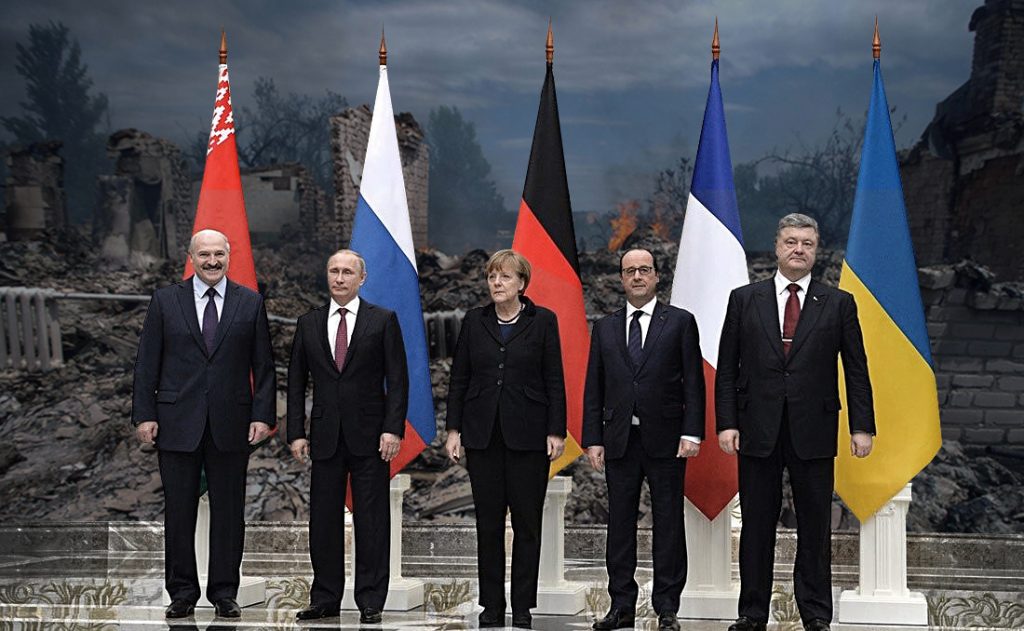
The main actors involved in the negotiation process leading to the Minsk Accords included:
- Ukraine, represented by President Petro Poroshenko.
- Russia, represented by President Vladimir Putin.
- The Organization for Security and Co-operation in Europe (OSCE), which served as a mediator and monitor.
- The leaders of the self-proclaimed Donetsk and Luhansk People’s Republics (DPR and LPR), respectively, Alexander Zakharchenko and Igor Plotnitsky.
Implementation Challenges
The Minsk Accords, despite their ambitious goals, faced numerous obstacles that hampered their implementation and ultimately contributed to their failure to bring lasting peace to Ukraine. These challenges stemmed from a complex interplay of factors, including the deep-seated mistrust between the parties involved, the difficulty of enforcing a ceasefire in a conflict zone, and the influence of external actors with divergent interests.
The Minsk Accords, intended to bring peace to Ukraine, ultimately failed due to a complex interplay of factors, including mistrust, conflicting interpretations, and a lack of commitment from all parties. It’s interesting to contrast this with the way Apple, apple starts connecting the dots for its next big thing , meticulously plans its product launches, seemingly leaving no room for misinterpretation or failure.
In the case of the Minsk Accords, however, the lack of a clear and unified vision for the future of Ukraine ultimately led to its downfall, leaving the region in a state of prolonged conflict.
Obstacles to Implementation
The Minsk Accords were plagued by several key obstacles that hindered their successful implementation.
- The lack of trust between the Ukrainian government and the pro-Russian separatists in eastern Ukraine was a major impediment. Both sides viewed each other with suspicion and were reluctant to fully commit to the accords’ provisions, fearing betrayal or a lack of commitment from the other side.
- The ceasefire provisions were frequently violated, leading to ongoing violence and making it difficult to establish a stable environment for political dialogue and reconciliation. The constant fighting undermined the trust necessary for progress on other aspects of the accords.
- The accords were complex and multifaceted, requiring a series of interconnected steps to be taken in a specific order. This complexity made it difficult to monitor compliance and ensure that all parties were fulfilling their obligations. The lack of a clear and consistent implementation framework further complicated the process.
- The ongoing conflict in eastern Ukraine was deeply intertwined with the broader geopolitical rivalry between Russia and the West. This rivalry fueled tensions and made it difficult for the parties to find common ground on key issues such as Ukraine’s neutrality and its future relationship with Russia.
It’s disheartening to see how the Minsk Accords, intended to bring peace to Ukraine, ultimately failed. The complex geopolitical landscape, mistrust between parties, and the lack of strong international enforcement mechanisms all played a role. It’s a stark reminder of the challenges in resolving international conflicts.
Meanwhile, on a more positive note, UPS’s recent initiative providing $150,000 in grant funds to AAPI-owned businesses is a commendable step towards fostering economic empowerment and inclusivity. Hopefully, such efforts can contribute to a more equitable and peaceful world, even if the path to peace in Ukraine remains unclear.
Role of External Actors
The involvement of external actors, particularly Russia and the West, further complicated the implementation of the Minsk Accords.
- Russia, a key player in the conflict, was accused of providing military and financial support to the separatists, hindering the implementation of the accords and fueling the violence in eastern Ukraine. This support, combined with Russia’s annexation of Crimea, raised concerns about its commitment to a peaceful resolution.
- The West, including the United States and the European Union, imposed sanctions on Russia in response to its actions in Ukraine. These sanctions aimed to pressure Russia into complying with the accords and withdrawing its support for the separatists. However, they also strained relations between Russia and the West, making it more difficult to find a common ground for a negotiated settlement.
- The conflicting interests of Russia and the West regarding Ukraine’s future and its relationship with NATO also contributed to the difficulties in implementing the Minsk Accords. Russia opposed Ukraine’s aspirations to join NATO, viewing it as a threat to its own security.
Analyzing why the Minsk Accords failed to bring peace to Ukraine is a complex task, requiring a deep understanding of the historical context and the interplay of political forces. The situation highlights a tragic reality, much like the ongoing struggle against tuberculosis, which, as described in this article tuberculosis is the oldest pandemic and poverty makes it continue , has been a persistent threat for centuries, exacerbated by poverty and lack of resources.
Similarly, the failure of the Minsk Accords underscores the deep-rooted issues that continue to fuel conflict in Ukraine, emphasizing the need for comprehensive and sustainable solutions.
The West, on the other hand, supported Ukraine’s right to choose its own alliances, further deepening the geopolitical divide.
Conflicting Interpretations
The Minsk Accords were subject to different interpretations by the parties involved, leading to disagreements over their implementation.
- The Ukrainian government and the pro-Russian separatists had different views on the sequencing of the accords’ provisions, particularly on the issue of holding elections in eastern Ukraine. The Ukrainian government insisted on a ceasefire and the withdrawal of foreign fighters before elections, while the separatists demanded a simultaneous implementation of both steps.
- The issue of Ukraine’s future status, particularly its neutrality and its relationship with NATO, was also subject to conflicting interpretations. The Ukrainian government, with Western support, sought to maintain its independence and autonomy, while Russia pressed for Ukraine’s neutrality and a closer relationship with Russia.
- The Minsk Accords were a product of compromise and were not universally accepted by all parties involved. Some groups, such as the Ukrainian nationalist groups, opposed the accords, arguing that they would cede too much territory to Russia and its allies.
Role of Ukraine and Russia
The Minsk Accords were a product of negotiations between Ukraine, Russia, and representatives of the self-proclaimed Donetsk and Luhansk People’s Republics (DPR and LPR) in eastern Ukraine. Both Ukraine and Russia played crucial roles in the agreements, but their perspectives and actions differed significantly, ultimately contributing to the accords’ failure.
Perspectives of Ukraine and Russia, Analysis why the minsk accords failed to bring ukraine peace
The Minsk Accords were a complex compromise, with both sides having to make concessions. Ukraine’s primary goal was to regain control of its lost territories and end the war, while Russia aimed to maintain its influence in Ukraine and protect the interests of the pro-Russian separatists.
- Ukraine viewed the accords as a necessary step to stop the bloodshed and regain control of its territory. However, they were concerned about the provisions that granted special status to the DPR and LPR, which they perceived as legitimizing the separatists and undermining Ukraine’s sovereignty.
Ukraine also expressed reservations about the terms of disarmament and withdrawal of foreign troops, fearing that Russia would exploit the process to further its interests.
- Russia, on the other hand, saw the accords as a way to solidify its influence in Ukraine and protect its strategic interests. They supported the provisions granting special status to the DPR and LPR, as it would effectively create a buffer zone between Russia and Ukraine, weakening Ukraine’s pro-Western stance.
Russia also saw the accords as a way to legitimize its intervention in Ukraine and to weaken Ukraine’s military capabilities.
Actions Taken to Uphold the Agreements
Despite the agreements, both Ukraine and Russia failed to fully implement the Minsk Accords.
- Ukraine faced significant challenges in implementing the accords, including the difficulty of controlling the separatist-held territories and the lack of trust in Russia’s commitment to the agreements. Ukraine also struggled to implement the provisions related to constitutional reform and decentralization, as these issues were highly contested within Ukrainian society.
- Russia, despite its role in brokering the accords, was accused of violating the agreements by continuing to support the separatists militarily and financially. Russia also failed to withdraw its troops from Ukraine and did not fully comply with the provisions on ceasefire and prisoner exchanges.
The annexation of Crimea and the escalation of the conflict in Donbas further undermined the credibility of Russia’s commitment to the accords.
Implications of the Minsk Accords
The failure of the Minsk Accords had significant implications for the relationship between Ukraine and Russia.
- The accords’ failure deepened the mistrust and hostility between the two countries, further polarizing Ukrainian society and exacerbating the conflict in Donbas. The conflict also had a profound impact on Ukraine’s economy and social fabric, leading to a decline in living standards and a surge in internal displacement.
- The failure of the Minsk Accords also had wider geopolitical implications, highlighting the fragility of international peace agreements and the challenges of resolving conflicts in post-Soviet states. It also demonstrated the limitations of diplomacy in resolving complex geopolitical disputes, particularly when one side is unwilling to compromise or respect the sovereignty of its neighbor.
Closure
The Minsk Accords stand as a cautionary tale about the complexities of peacemaking in conflict zones. While the agreements initially offered hope for a peaceful resolution, their failure highlights the importance of addressing the root causes of conflict and ensuring that all parties are truly committed to implementation.
The lessons learned from the Minsk Accords can inform future efforts to achieve lasting peace in Ukraine and other conflict-ridden regions.