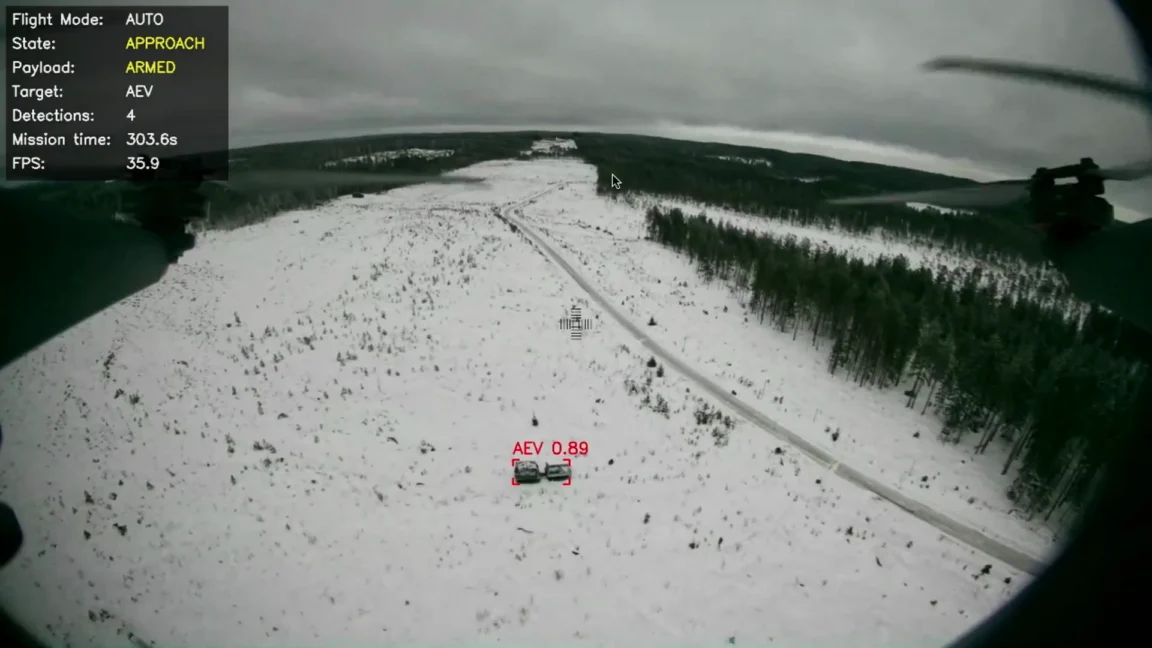
As the nature of modern conflict undergoes a seismic shift driven by autonomous systems and rapid sensor data collection, European defense forces are increasingly turning to decentralized intelligence to maintain a tactical edge. Scaleout Systems, a Swedish startup emerging from the academic rigors of Uppsala University, has positioned itself at the forefront of this evolution. By implementing federated learning architectures specifically designed for the harsh, bandwidth-constrained, and electronically contested environments of the modern front line, the company is enabling military hardware—from small-scale surveillance drones to field command posts—to learn and adapt in real time without the need for constant, vulnerable connectivity to centralized data centers.
The Strategic Pivot: From Commercial Logistics to Defense
Founded in 2018, Scaleout Systems initially sought to solve challenges in the commercial sector, focusing on training machine learning models on decentralized hardware found in heavy-duty logistics and trucking. However, the geopolitical volatility triggered by Russia’s full-scale invasion of Ukraine in 2022 necessitated a redirection of their technical capabilities. CEO Andreas Hellander identified a critical vulnerability in current military AI: the reliance on massive, centralized cloud infrastructures that are not only susceptible to electronic warfare (EW) and kinetic strikes but also incapable of providing real-time model updates in disconnected environments.
The war in Ukraine served as a crucible for this technological pivot. The conflict demonstrated that high-value assets—including server farms and data processing hubs—are primary targets for long-range missile strikes and cyber-sabotage. Consequently, Scaleout shifted its focus toward “edge intelligence.” By moving the computational load from the cloud to the drone itself, or to the local platoon-level server, the company aims to ensure that NATO allies maintain a strategic advantage even when communication links are severed or jammed.
Understanding Federated Learning at the Edge
The core of Scaleout’s solution lies in federated learning, a machine learning technique that allows models to be trained across multiple decentralized devices holding local data samples, without ever exchanging the raw data itself. In a military context, this is revolutionary. A drone operating over a battlefield gathers vast amounts of visual information. Instead of transmitting this high-bandwidth video feed back to a command center—a process that creates an electronic signature easily detected by enemy signals intelligence—the drone processes the imagery locally.
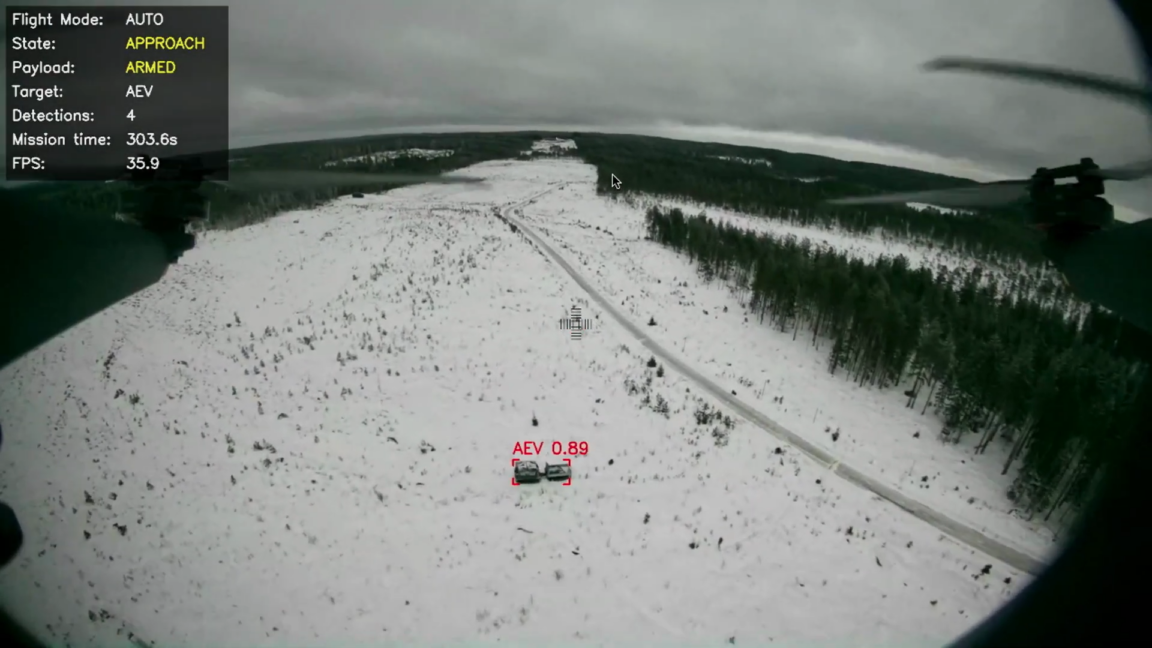
The onboard AI identifies, classifies, and geolocates threats. Only the “learned” updates—the mathematical weights representing the model’s refined understanding of the environment—are transmitted back to a local command node. This local node aggregates updates from multiple drones to create a more robust, updated model, which is then pushed back out to the fleet. This cycle of “local training, global aggregation” ensures that the AI is constantly improving based on the latest terrain, weather, and camouflage patterns encountered on the ground, all while maintaining strict data security and reducing the need for constant, high-bandwidth data links.
Chronology of Development and NATO Integration
The trajectory of Scaleout Systems has been marked by rapid validation through institutional partnerships and rigorous field testing:
- 2018: Scaleout Systems is established by researchers from Uppsala University, focusing on decentralized machine learning for commercial logistics and vehicle fleets.
- 2022: Following the outbreak of the Ukraine war, the company pivots its primary research and development efforts toward defense and security applications.
- January 2026: The company participates in the Winter Demo 2026 in Sweden, showcasing the Affordable Loitering Modular Ammunition (ALMA) project in partnership with BAE Systems Bofors.
- June 2026: A successful test is conducted at a Swedish Air Force base in Uppsala, demonstrating the ability of a forward-deployed node to maintain autonomous AI inference and active learning despite being disconnected from central servers.
- 2025/2026: Scaleout is selected for the NATO Defence Innovator Accelerator for the North Atlantic (DIANA) Challenge Program, formalizing their role in developing Federated Aerial Intelligence for Recon (FAIR).
Technical Analysis: Bridging the Environmental Gap
One of the most significant challenges in military AI is “domain adaptation.” An AI model trained on imagery from a desert environment often suffers from significant performance degradation when deployed in dense urban or forested terrain. The traditional approach to solving this—re-training the model on a massive server farm and then re-deploying it—is too slow for an active combat environment.
Scaleout’s approach addresses this by allowing for iterative, rapid updates. As Hellander notes, if a drone unit is deployed to a new sector, the models can effectively “learn” the unique characteristics of that environment within hours. Because these updates are lightweight and incremental, they can be pushed over narrow-band radio links that would be insufficient for downloading entire new software packages. This capability ensures that the AI remains relevant as the tactical situation evolves, providing a sustainable advantage in rapidly changing battlefields.
The ALMA Project and Autonomous Engagement
The most tangible manifestation of this technology is found in the ALMA project. During public demonstrations, the system illustrated a drone’s capacity to detect, identify, and prioritize targets autonomously. In the scenario presented, the drone identified an armored engineering vehicle, calculated the necessary engagement parameters, and executed the mission without direct human input for the final strike phase.

While this raises questions regarding the ethics of autonomous weapons systems, the industry trend remains focused on the "human-in-the-loop" or "human-on-the-loop" paradigm. The drone acts with autonomy in its navigation and target recognition, but human operators maintain the ability to intervene or abort the mission. The onboard computing capability allows this process to occur entirely in real-time, eliminating the latency that could be exploited by an enemy.
Broader Implications for NATO and Global Security
The integration of decentralized AI into the NATO defense apparatus signifies a move toward more resilient, distributed warfare. As high-tech adversaries increasingly target data centers and communication satellites, the ability of a unit to operate as an autonomous, self-learning entity becomes a survival requirement.
Furthermore, the federated learning framework offers a unique pathway for interoperability between NATO member states. By sharing model weights rather than proprietary raw sensor data, nations can benefit from a collective intelligence network without compromising the sensitive details of their specific surveillance operations or the specific nature of their local data.
Conclusion
The work being done by Scaleout Systems is representative of a broader shift in the defense industry—a move away from the monolithic, centralized AI of the tech giants toward lean, ruggedized, and highly specialized edge intelligence. As the company continues its work within the NATO DIANA program, its success will likely depend on its ability to balance the rapid iteration of its algorithms with the stringent reliability standards required by military hardware.
The battlefield of the future will not necessarily be won by those with the largest datasets, but by those whose systems can learn the fastest and operate most independently when the fog of war descends. By turning every sensor and drone into a potential learning node, Scaleout Systems is laying the groundwork for a new era of decentralized, adaptive, and resilient combat capability. As electronic warfare becomes an ever-present feature of conflict, the ability to maintain "intelligence at the edge" may well be the defining difference between tactical success and failure.