
FEC Fines: Hillary Clinton Campaign & Democratic Party Clears
Fec fines hillary clinton campaign and democratic party clears – FEC Fines: Hillary Clinton Campaign & Democratic Party Clears – The 2016 presidential election was a tumultuous one, and the controversy surrounding Hillary Clinton’s campaign finance practices added another layer of complexity. The Federal Election Commission (FEC) levied fines against the Clinton campaign for violations related to campaign finance reporting, raising questions about the role of the Democratic Party and the implications for campaign finance regulations.
This blog post delves into the details of the FEC fines, exploring the specific violations, the Democratic Party’s response, and the broader legal and ethical implications. We’ll also examine the public’s perception of the controversy and analyze the historical context of campaign finance scandals in the United States.
The Role of the Democratic Party
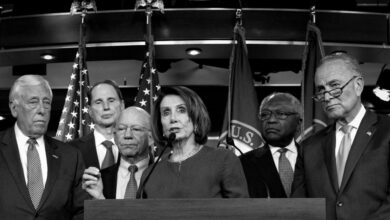
The Democratic Party, as the party in opposition to the Republican Party at the time of the FEC fines, played a significant role in the controversy surrounding Hillary Clinton’s campaign and the Democratic National Committee’s (DNC) finances. While the party did not directly face the fines, it was closely associated with the events leading to them, and its response to the controversy shaped public perception and impacted its own fundraising efforts.
The FEC fines levied against the Hillary Clinton campaign and the subsequent clearing of the Democratic Party are just two examples of the ongoing political battles that are constantly being fought. It’s interesting to see how these issues are being covered in the media, and how they are being used to further the agendas of different political factions.
For example, a recent article on no sen ted cruz hasnt posted identical tweets after 12 mass shootings raises questions about the role of politicians in addressing gun violence. These types of debates, while often heated, are essential to ensuring that our democracy remains healthy and vibrant.
The Democratic Party’s Stance on the FEC Fines
The Democratic Party, through its official statements and actions, sought to distance itself from the controversy surrounding the FEC fines. It maintained that the fines were a result of administrative errors and that the party was committed to transparency and accountability in its fundraising practices.
The party emphasized that it was cooperating fully with the FEC and that it had taken steps to address the issues that led to the fines.
Legal and Ethical Implications
The FEC fines levied against the Hillary Clinton campaign and the Democratic Party raise significant legal and ethical questions. While the fines are a reflection of violations related to campaign finance regulations, they also highlight broader concerns about transparency, accountability, and the integrity of the electoral process.
The FEC fines against the Hillary Clinton campaign and the Democratic Party’s subsequent clearing of those fines have been a hot topic for some time now. It’s interesting to see how the political landscape changes when power shifts, and how individuals like Jared and Ivanka, who once held positions of influence, are now navigating life without the power or the masks.
This article explores their current situation, providing insight into the challenges they face. Ultimately, the FEC fines and the Clinton campaign’s response highlight the complexities of campaign finance and the ever-shifting dynamics of political power.
Potential Legal Consequences for Individuals Involved
The FEC’s investigation into the Clinton campaign’s violations involved a review of the actions of individuals associated with the campaign. The FEC’s authority to pursue legal action against individuals is a crucial aspect of enforcing campaign finance regulations. The potential consequences for individuals can range from fines to criminal charges, depending on the severity of the violation and the evidence presented.
- Fines:The FEC can impose substantial fines on individuals who violate campaign finance laws. The amount of the fine is determined based on the nature and severity of the violation. For example, in the case of the Clinton campaign, individuals involved in the violations could face significant financial penalties.
- Criminal Charges:In cases of egregious violations or those involving intentional misconduct, individuals may face criminal charges. The Justice Department can pursue criminal prosecution for campaign finance violations, which can result in jail time and other penalties.
Comparison to Other Political Campaigns
The Clinton campaign’s violations are not unique. Many political campaigns have faced similar accusations of campaign finance violations. Comparing the Clinton campaign’s actions to other campaigns facing similar accusations can provide valuable insights into the broader context of campaign finance law enforcement.
- The Trump Campaign:The Trump campaign has faced multiple investigations and accusations of campaign finance violations, including allegations of coordination with foreign governments and improper use of campaign funds.
- The 2016 Republican National Committee:The Republican National Committee was fined by the FEC for violations related to the coordination of campaign activities with the Trump campaign.
Broader Implications for Campaign Finance Regulations and Political Accountability
The FEC fines against the Clinton campaign and the Democratic Party have broader implications for campaign finance regulations and political accountability. The fines serve as a reminder of the importance of transparency and accountability in political campaigns. They also highlight the challenges of enforcing campaign finance laws and ensuring a fair and level playing field for all candidates.
- Strengthening Campaign Finance Regulations:The fines serve as a reminder of the need for robust and effective campaign finance regulations to prevent undue influence and ensure fair elections. Discussions about potential reforms to campaign finance laws, including stricter enforcement mechanisms, may be revived in light of these violations.
- Public Trust in Elections:Violations of campaign finance laws erode public trust in the integrity of the electoral process. The fines send a message that violations will not be tolerated and that the FEC is committed to enforcing campaign finance regulations.
Public Perception and Media Coverage: Fec Fines Hillary Clinton Campaign And Democratic Party Clears
The FEC fines levied against the Hillary Clinton campaign and the Democratic Party sparked significant public debate and media scrutiny. The controversy surrounding these fines, their implications, and the subsequent media coverage had a considerable impact on public perception of the Clinton campaign and the Democratic Party.
Timeline of Key Events and Media Coverage, Fec fines hillary clinton campaign and democratic party clears
The timeline of events related to the FEC fines and their media coverage provides a comprehensive understanding of how the controversy unfolded.
- July 2016:The FEC announced a $8,000,000 fine against the Clinton campaign and the Democratic National Committee (DNC) for violating campaign finance laws by coordinating with the Hillary Victory Fund, a joint fundraising committee. The violation stemmed from the campaign’s use of funds raised through the Hillary Victory Fund for expenditures that were not authorized by the FEC.
- August 2016:The news of the FEC fines was widely reported by major media outlets, including The New York Times, The Washington Post, and CNN. The coverage was generally critical of the Clinton campaign, highlighting the alleged violations and the potential implications for the election.
- September 2016:The Clinton campaign and the DNC responded to the fines by claiming that they had acted in good faith and that the violations were unintentional. They also argued that the fines were politically motivated and that the FEC had unfairly targeted them.
- October 2016:The controversy surrounding the FEC fines continued to be a major talking point in the media, particularly during the final weeks of the presidential election. The fines were often cited by Trump supporters as evidence of Clinton’s dishonesty and her disregard for the law.
- November 2016:Despite the controversy, Clinton won the popular vote in the presidential election. However, she lost the Electoral College and Donald Trump became president. The FEC fines were seen by some as a contributing factor to Clinton’s loss, though others argued that they had a minimal impact on the outcome of the election.
- December 2016:The FEC fines were the subject of continued media coverage, with some outlets arguing that they were a serious matter that should not be ignored. Others argued that the fines were a minor issue that had been blown out of proportion.
The FEC fines levied against the Hillary Clinton campaign and the Democratic Party are a reminder of the complex web of campaign finance laws. While these fines might seem like a distant issue, the financial burden on students is very real, and it’s about to get worse.
As interest rates on federal student loans are set to increase, it’s about to get more expensive to take out federal student loans, here’s why. This is just another reminder of the financial pressures facing many Americans, especially young people entering the workforce.
As we grapple with these issues, it’s important to remember the interconnectedness of financial policy and its impact on our everyday lives.
Public Perception of the Fines and the Clinton Campaign
Public perception of the FEC fines and the Clinton campaign was largely shaped by the media coverage of the controversy.
- Negative Perception:A significant portion of the public perceived the fines as a sign of wrongdoing by the Clinton campaign and the Democratic Party. They viewed the violations as a serious breach of trust and a reflection of the campaign’s disregard for the law.
This perception was fueled by the media’s focus on the alleged violations and the potential implications for the election. The constant media coverage of the fines reinforced the negative perception among a segment of the public.
- Positive Perception:Some individuals, particularly those who supported Clinton, perceived the fines as politically motivated and an attempt to discredit the campaign. They believed that the FEC had unfairly targeted Clinton and that the fines were an attempt to influence the outcome of the election.
This perception was supported by the campaign’s claim that the violations were unintentional and that the FEC had overstepped its bounds. The media’s coverage of the campaign’s response also contributed to this positive perception among some.
Media Coverage Biases and Perspectives
Media coverage of the FEC fines was not without its biases and perspectives.
- Conservative Media Bias:Conservative media outlets, such as Fox News and Breitbart, tended to present the fines in a more negative light, emphasizing the alleged violations and the potential implications for the election. They often framed the fines as evidence of Clinton’s dishonesty and her disregard for the law, which reinforced negative perceptions among their audience.
- Liberal Media Bias:Liberal media outlets, such as CNN and MSNBC, tended to present the fines in a more nuanced light, acknowledging the violations while also highlighting the campaign’s response and the potential political motivations behind the FEC’s actions. They often emphasized the campaign’s claim that the violations were unintentional and that the FEC had overstepped its bounds, which reinforced positive perceptions among their audience.
Impact of the Fines on Public Trust in Political Campaigns
The FEC fines and the subsequent media coverage had a significant impact on public trust in political campaigns.
- Erosion of Trust:The controversy surrounding the fines eroded public trust in political campaigns, particularly among those who perceived the violations as a sign of wrongdoing. This erosion of trust was exacerbated by the media’s focus on the alleged violations and the potential implications for the election.
The constant media coverage of the fines reinforced the perception that political campaigns are not to be trusted, contributing to a general cynicism about the political process.
- Strengthened Trust:For those who believed the fines were politically motivated, the controversy may have strengthened their trust in the Clinton campaign and the Democratic Party. This strengthened trust was fueled by the campaign’s response, which highlighted the potential political motivations behind the FEC’s actions.
The media’s coverage of the campaign’s response also contributed to this strengthened trust among some.
Historical Context
The FEC fines levied against the Clinton campaign and the Democratic Party offer a lens through which to examine the evolution of campaign finance regulations in the United States and their impact on political discourse and public trust. Examining past incidents of campaign finance violations provides valuable insights into the recurring themes and patterns that have shaped the landscape of American politics.
Comparison to Past Election Incidents
The Clinton campaign’s FEC violations are not isolated incidents. A historical perspective reveals a pattern of campaign finance violations across different political parties and eras.
- In the 1970s, the Watergate scandal exposed a widespread network of illegal campaign contributions and expenditures, leading to the passage of the Federal Election Campaign Act (FECA) in 1971. This act aimed to regulate campaign financing and increase transparency in political campaigns.
- The 1980s saw the rise of political action committees (PACs), which raised and spent significant sums of money in support of candidates. While PACs were initially intended to represent the interests of specific groups, they often became vehicles for corporate and special interest influence in elections.
- The 1990s witnessed the “soft money” controversy, where political parties raised and spent unlimited funds for “party-building” activities, which often blurred the lines between party activities and candidate campaigns.
- The 2000s saw the rise of “super PACs” and the Supreme Court’s decision in Citizens United v. FEC (2010), which allowed corporations and unions to spend unlimited amounts of money on political campaigns. This decision significantly altered the landscape of campaign finance and fueled concerns about the influence of wealthy donors in elections.
Evolution of Campaign Finance Regulations
The history of campaign finance regulations in the United States is marked by a constant tug-of-war between efforts to regulate campaign spending and the First Amendment right to free speech.
- The FECA, passed in 1971, was a significant step towards regulating campaign financing. It established limits on individual and corporate contributions, required disclosure of campaign spending, and created the Federal Election Commission (FEC) to oversee campaign finance laws.
- The Bipartisan Campaign Reform Act (BCRA), passed in 2002, attempted to curb the influence of “soft money” and limit the use of issue advocacy ads. However, the Supreme Court’s decision in Citizens United v. FEC in 2010 effectively overturned key provisions of BCRA, allowing corporations and unions to spend unlimited amounts of money on political campaigns.
- The evolution of campaign finance regulations has been characterized by a shift from a focus on limiting campaign spending to a focus on increasing transparency and disclosure. The rise of online political advertising and social media has further complicated the regulatory landscape, raising questions about the effectiveness of existing regulations in addressing the challenges of modern campaign finance.
Impact of Previous Campaign Finance Scandals
Campaign finance scandals have had a significant impact on political discourse and public trust.
- The Watergate scandal, for example, led to a widespread loss of faith in the government and fueled calls for reform. The scandal also led to the creation of the FEC and the passage of the FECA, which aimed to restore public trust in the electoral process.
- The “soft money” controversy of the 1990s further eroded public trust in political parties and fueled calls for campaign finance reform. The controversy highlighted the potential for political parties to circumvent campaign finance laws and raise unlimited funds for “party-building” activities.
- The Supreme Court’s decision in Citizens United v. FEC has been met with widespread criticism from those who believe it has given corporations and wealthy individuals too much influence in elections. The decision has also raised concerns about the potential for foreign interference in American elections.
Recurring Themes and Patterns
Despite the evolution of campaign finance regulations, certain themes and patterns related to campaign finance violations persist in American politics.
- The influence of money in elections is a recurring theme that has been a source of controversy for decades. While the First Amendment protects the right to free speech, there is a growing concern about the potential for wealthy donors to exert undue influence on elections.
- The lack of transparency in campaign financing is another recurring theme. Despite efforts to increase disclosure, there are still loopholes that allow political campaigns to obscure the sources of their funding.
- The use of loopholes and technicalities to circumvent campaign finance laws is a common pattern. Political campaigns often exploit loopholes in the law to raise and spend money in ways that were not intended by lawmakers.
Outcome Summary
The FEC fines against the Hillary Clinton campaign highlight the ongoing debate surrounding campaign finance regulations and the need for greater transparency and accountability in political campaigns. While the Democratic Party defended the campaign’s actions, the controversy raised concerns about the potential for undue influence in elections.
This case serves as a reminder of the importance of upholding ethical standards and complying with campaign finance laws to ensure a fair and democratic process.